← The Bosnian Genocide / Themes & Analysis
The war and genocide in Bosnia and Herzegovina, from the first takeovers to Dayton
The Bosnian genocide was not a single event but a process. It began with the coordinated seizure of municipalities in the spring of 1992, passed through the camp system and the mass expulsions of that first summer, hardened into the long sieges of 1993–1994, and culminated in the genocide at Srebrenica in July 1995. This timeline marks the principal turning points and links them to the place-by-place documentation on this site. Dates are given as established in the judgments of the ICTY and ICJ and the forensic record.
1991. As Yugoslavia disintegrates, the Bosnian Serb leadership under Radovan Karadžić forms self-declared "Serb Autonomous Regions" and, in the autumn, secretly issues directives ("Variant A/B") for the takeover of municipalities. War erupts in neighbouring Croatia.
9 January 1992. The Bosnian Serb Assembly proclaims the "Republic of the Serbian People of Bosnia and Herzegovina" (later Republika Srpska).
29 February – 1 March 1992. Bosnia and Herzegovina votes for independence in a referendum boycotted by most Serbs.
1–2 April 1992. Paramilitaries seize Bijeljina and kill civilians — the first town to fall, photographed by Ron Haviv.
6 April 1992. The European Community recognizes Bosnia's independence; the siege of Sarajevo begins. Over the following weeks Serb forces seize Zvornik, Višegrad, Foča, Vlasenica, and the eastern Drina valley.
30 April 1992. The takeover of Prijedor; within weeks the Omarska, Keraterm, and Trnopolje camps are established and the town of Kozarac destroyed.
May–August 1992. The peak of the campaign: roughly 70 percent of the war's expulsions occur as Serb forces attack dozens of municipalities. Massacres at Glogova (9 May), the Vrhpolje bridge (31 May), Bijeli Potok (1 June), and Biljani (10 July). The Korićani Cliffs massacre (21 August) kills over 200 deportees.
August 1992. Journalists reach Omarska and Trnopolje; images of emaciated prisoners behind barbed wire bring the phrase "ethnic cleansing" into global usage.
October 1992. The fall of Jajce sends 30,000–40,000 refugees fleeing toward central Bosnia.
16 April 1993. The Croat–Bosniak war erupts in central Bosnia; HVO forces massacre some 116 Bosniaks at Ahmići.
16 April / 6 May 1993. The UN Security Council declares Srebrenica and then Goražde, Žepa, Sarajevo, Tuzla, and Bihać "safe areas."
9 May 1993. The HVO besieges East Mostar; on 9 November an HVO tank destroys the 16th-century Old Bridge.
6–7 May 1993. Serb forces dynamite the Ferhadija and Arnaudija mosques in Banja Luka.
October 1993. The HVO massacres villagers at Stupni Do.
Throughout 1993 the besieged enclaves endure shelling, sniping, and starvation; the camps of the lower Neretva (Dretelj and Gabela) and the human-shield killings of Prozor mark the HVO campaign against Bosniaks.
5 February 1994. The first Markale market massacre kills 68 in Sarajevo, prompting a NATO ultimatum.
Spring 1994. A major VRS offensive nearly overruns Goražde; NATO air strikes help halt it.
18 March 1994. The Washington Agreement ends the Croat–Bosniak war and creates the Federation of Bosnia and Herzegovina.
1993–1994. In the Bihać pocket, Fikret Abdić's breakaway faction allies with the besieging Serb armies against the Bosnian government.
25 May 1995. A VRS shell kills 71 young people in the Kapija square of Tuzla.
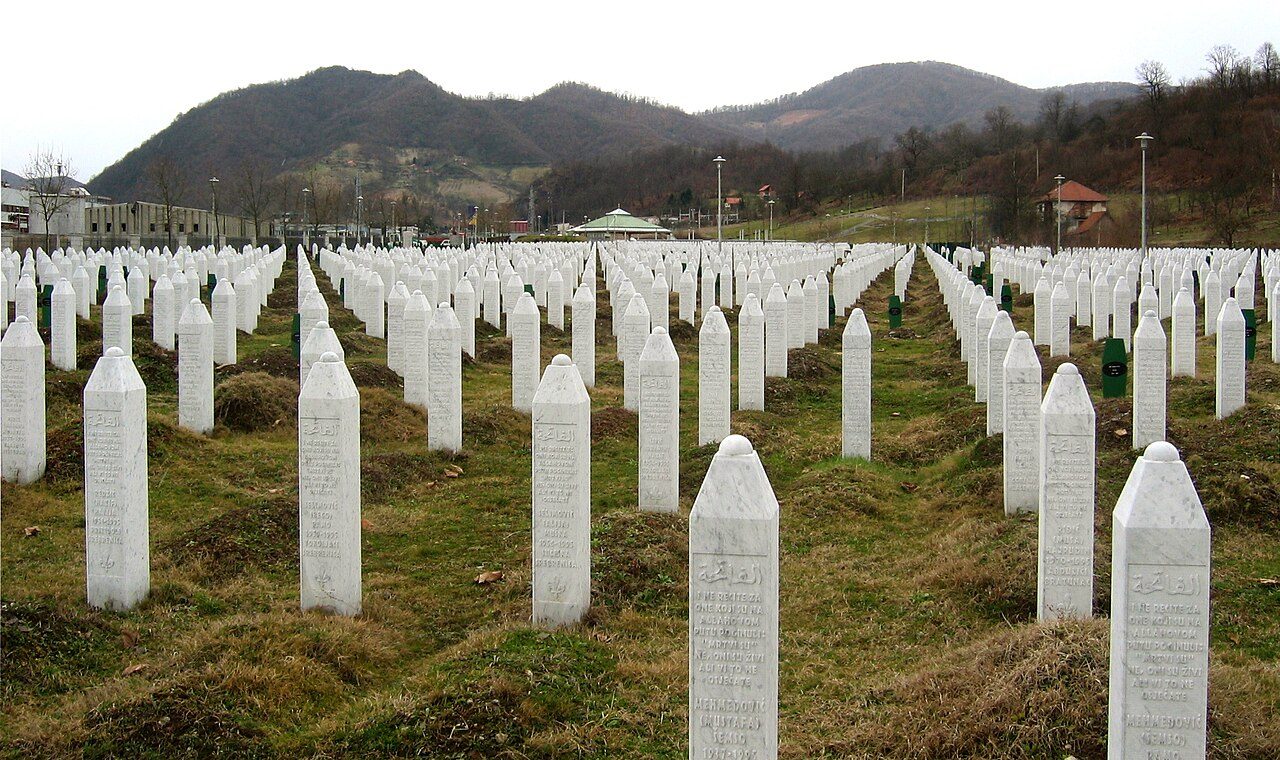
11 July 1995. The VRS overruns the Srebrenica "safe area." Over the following days more than 8,000 Bosniak men and boys are executed — the only events of the war ruled genocide by both the ICTY and the ICJ. The Scorpions film the killing of six captives near Trnovo.
25 July 1995. Žepa falls; its commander Avdo Palić is abducted and murdered.
28 August 1995. The second Markale massacre triggers NATO's Operation Deliberate Force.
September–October 1995. Bosnian and Croatian offensives retake parts of western Bosnia, including Donji Vakuf; the siege of Bihać is lifted.
21 November / 14 December 1995. The Dayton Peace Agreement is initialled in Ohio and signed in Paris, ending the war and dividing Bosnia into two entities.
2001–2004. The ICTY rules Srebrenica a genocide (Krstić); the Kunarac judgment recognizes sexual enslavement as a crime against humanity.
26 February 2007. The ICJ confirms genocide at Srebrenica and finds Serbia in breach of its duty to prevent it.
2016–2017. Radovan Karadžić and Ratko Mladić are convicted of genocide; the ICTY closes after 24 years.
2024. The UN General Assembly designates 11 July as the International Day of Reflection and Commemoration of the 1995 Genocide in Srebrenica.
For the law behind these judgments, see The ICTY and the Law of Genocide; for the contest over remembrance, see Genocide Denial and Memory.