← The Bosnian Genocide / Bosanska Krajina · Prijedor
The massacre of a deportation convoy on Mount Vlašić — the bloody epilogue of the Prijedor camps
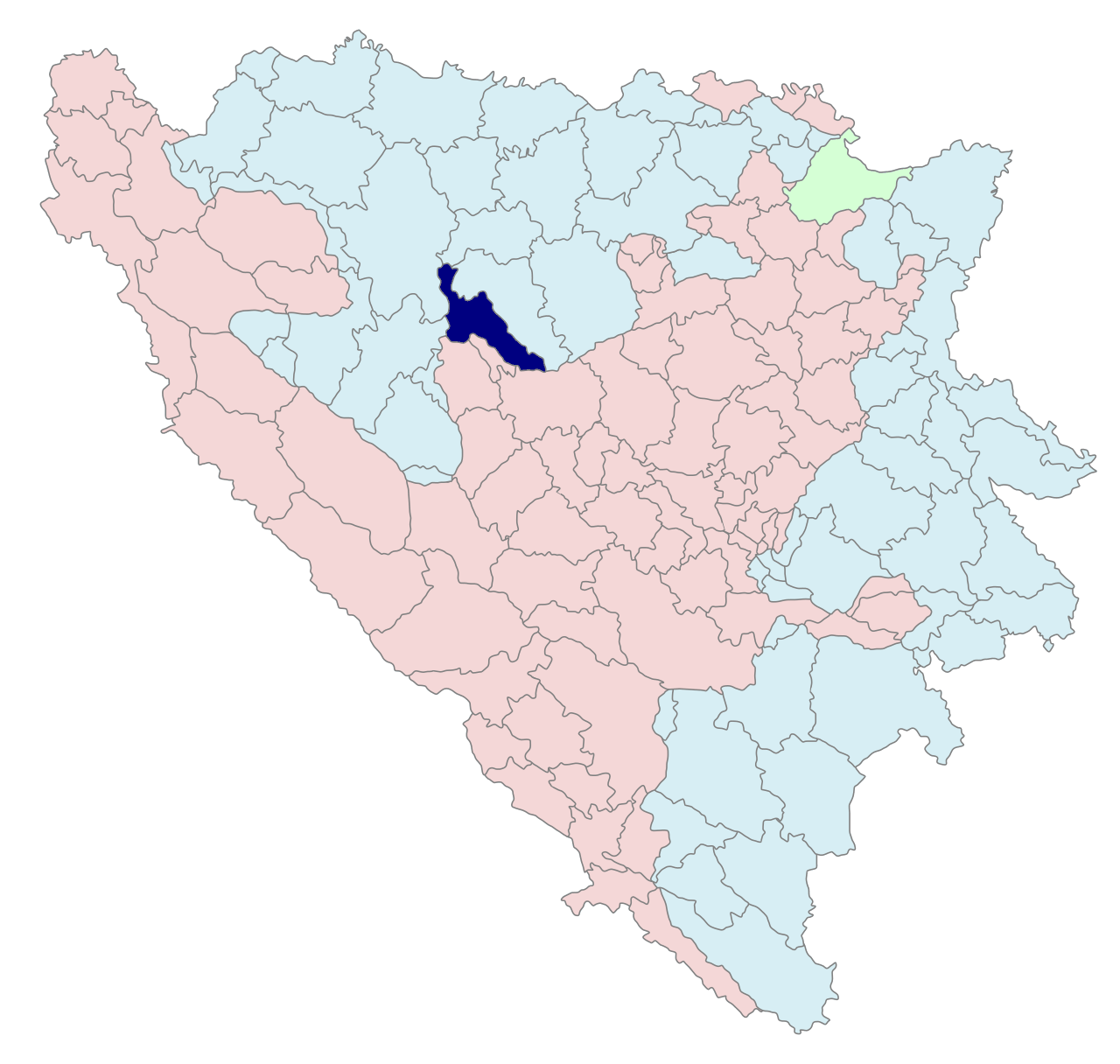
The Korićani Cliffs massacre was the single deadliest act of the Prijedor ethnic cleansing, and it took place not in the municipality's camps but on a mountain road sixty kilometres away. On 21 August 1992, a convoy of roughly 1,200 civilians — recently released from the Bosnian Serb-run Trnopolje camp and being deported toward government-held central Bosnia — was halted at the Korićani Cliffs on Mount Vlašić. There, a Prijedor police unit separated out more than two hundred men, lined them up at the edge of a ravine, and shot them, the bodies falling into the gorge below.
The massacre is the grim culmination of the Prijedor story: having survived the camps, these men were murdered at the very threshold of safety.
The convoy was part of the organized deportation by which the Prijedor authorities emptied the municipality of its surviving non-Serb population. After it reached Mount Vlašić, members of the Prijedor police special "Intervention Squad" ordered between 200 and 250 men off the buses, marched them to the edge of the Korićani Cliffs, and opened fire, finishing the wounded with rifle fire and grenades thrown into the ravine. Only a handful of men survived by feigning death or sheltering among the bodies and crawling away — among them the witnesses whose testimony would later sustain the prosecutions. The remains lay in the inaccessible gorge for years; recovery and DNA identification have been painstaking, with 181 of the victims identified by 2019.
Korićani was prosecuted at both the international and national levels:
Korićani exposes the deception at the heart of the deportation phase of ethnic cleansing. The convoys were presented — to the victims, to international monitors, and to history — as humanitarian "evacuations," the comparatively benign endpoint of the campaign: the survivors were at least being allowed to leave alive. The massacre reveals that "expulsion" and "extermination" were not alternatives but points on a continuum, and that the men of the targeted community remained marked for death even as they were ostensibly being released. The choice to murder them at the boundary of safe territory was, in its way, a final assertion of total power.
The identity of the killers matters. Korićani was carried out not by a frenzied paramilitary band but by a uniformed police unit of the Prijedor Public Security Centre, acting on command. This locates the massacre squarely within the official apparatus of the municipality — the same apparatus responsible for the camps — and reinforces the central finding of the Prijedor cases: that the persecution was a function of organized state-like authority, executed through its ordinary institutions of policing and administration.
A handful of men survived by feigning death and crawling away. One protected witness, ordered to line up at the edge of the ravine, recalled it simply: "I jumped down and I started crawling over the cliffs." He hid in a pine tree as policemen searched the gorge below for survivors, then walked the Vlašić road through the night to the village of Babanovac and spent nineteen days reaching government-held territory. It was on such testimony that the convictions of Darko Mrđa and others rested. In 2017, 137 victims were exhumed from the foot of the cliffs.
Sources: "Korićani Cliffs massacre," Wikipedia; Balkan Insight — Bosnia Exhumes 137 War Victims at Koricani Cliffs.
"Korićani Cliffs massacre," Wikipedia. Available at: en.wikipedia.org/wiki/Korićani_Cliffs_massacre
BIRN, "Koricani Cliffs" (Mass Graves Database). Available at: massgravesmap.balkaninsight.com — Koricani Cliffs
Balkan Insight, "Bosnians Commemorate Mountain Massacre Victims" (2014). Available at: balkaninsight.com — Mountain Massacre Victims
See also the ICTY judgment in Prosecutor v. Mrđa (IT-02-59) and the Court of BiH verdict in the Korićani Cliffs case, and the related entry on Prijedor.