← The Bosnian Genocide / Eastern Bosnia
The eastern enclave and UN “safe area” that, alone among the three, survived the war
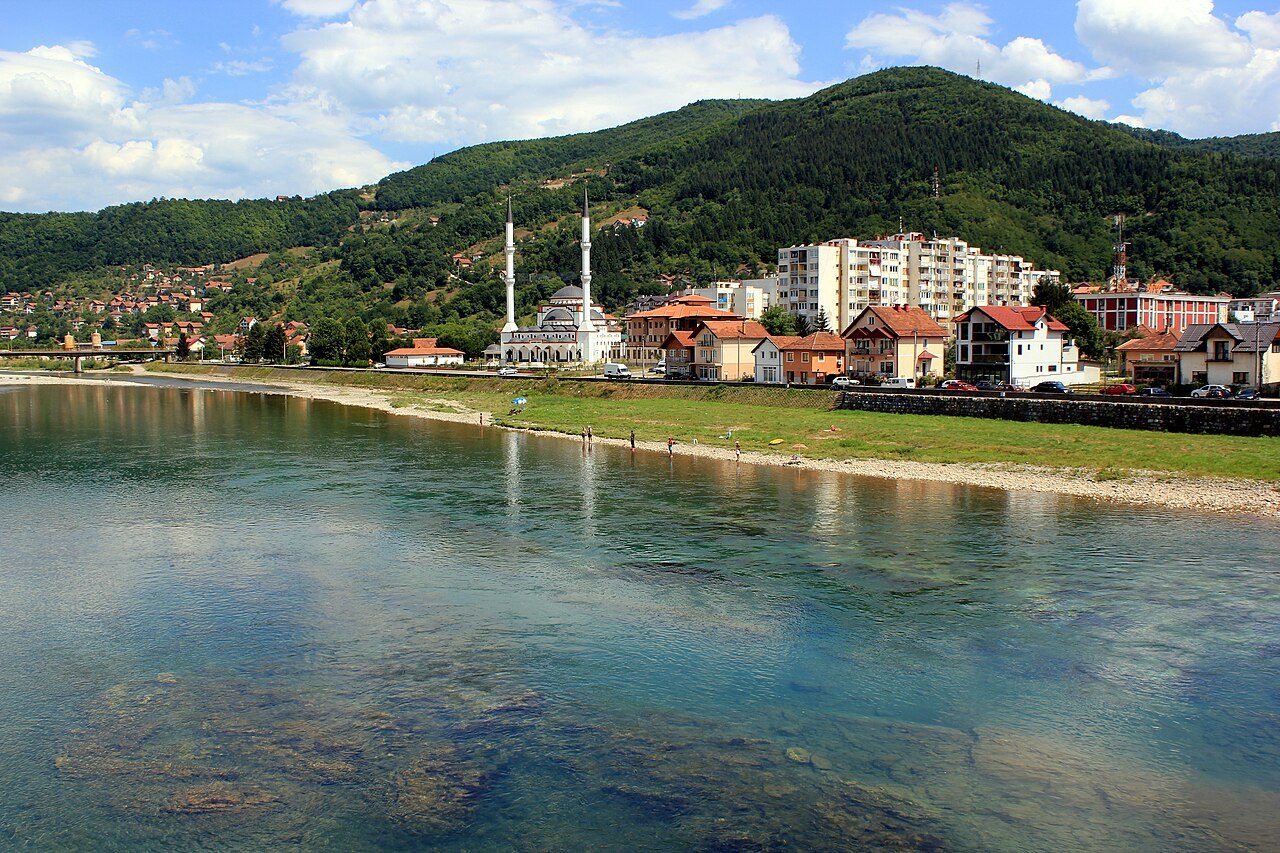
Goražde, a Bosniak-majority town on the upper Drina, was besieged by the Army of Republika Srpska from the first weeks of the war until its end — more than three years of shelling, sniping, and deprivation. In April 1993 the UN Security Council declared it one of three eastern "safe areas," alongside Srebrenica and Žepa. In the spring of 1994 the VRS launched a major offensive that nearly broke the enclave; it was halted in part by NATO air strikes and the threat of further action. Unlike its sister enclaves, Goražde held: it was never overrun, and its population was spared the fate of Srebrenica.
For that reason Goražde occupies an unusual place in this catalogue — it is a record not of a completed atrocity but of an atrocity survived, and of the difference that even limited international resolve could make.
Swollen by refugees from the surrounding cleansed municipalities, Goražde endured chronic shortages of food, water, electricity, and medicine, while its hospital struggled to treat a steady stream of casualties from artillery and sniper fire directed into the town. Estimates indicate that roughly 7,000 people were killed or wounded over the course of the siege, including more than 120 children — many of them after the town had been designated a place where the United Nations was supposed to deter attacks on civilians.
The April 1994 VRS offensive penetrated deep into the enclave before international intervention — NATO air strikes called in under UN authority — helped stabilize the front. The episode exposed both the vulnerability of the safe-area concept and the decisive effect that the credible use of force could have when it was finally applied.
In the study of the eastern enclaves, Goražde functions almost as a natural experiment. Srebrenica, Žepa, and Goražde were comparable Bosniak enclaves, declared safe areas on the same legal basis and nominally protected by the same under-resourced peacekeeping framework. Two were overrun in July 1995, with catastrophic consequences; one survived. The principal variables distinguishing Goražde — a larger and more defensible population, greater strategic and political visibility, and, critically, the willingness of NATO to use air power in its defence in 1994 — point directly to the lesson the international community drew too late: that the protection of civilians depends not on declarations but on the credible threat of force.
It would be a mistake to read Goražde's survival as a happy ending. Seven thousand killed or wounded, including scores of children, is the cost of a siege that "succeeded" only in the comparative sense that the town was not exterminated. Goražde reminds us that the spectrum of atrocity includes the slow, grinding violence of siege warfare directed at a civilian population — a form of mass harm that, precisely because it produces no single dramatic massacre, often receives less attention than it deserves.
Of the thousands killed and wounded during the siege, more than 120 were children — many of them after April 1993, when the UN had declared Goražde a "safe area" in which civilians were supposed to be protected from attack. Survivors recall a childhood spent in cellars, lessons held underground, and water fetched under sniper fire. Decades later, the killing of these children remains almost entirely unpunished: no one has been convicted specifically for the shelling and sniping that took their lives — a gap that the bereaved families of Goražde continue to protest.
Source: Balkan Insight — Child Deaths in Bosnia's Besieged Gorazde Still Unpunished (2019).
"Siege of Goražde," Wikipedia. Available at: en.wikipedia.org/wiki/Siege_of_Goražde
"Safe Area Goražde," Wikipedia. Available at: en.wikipedia.org/wiki/Safe_Area_Goražde
Balkan Insight, "Child Deaths in Bosnia's Besieged Gorazde Still Unpunished" (2019). Available at: balkaninsight.com — Child Deaths in Gorazde
Human Rights Watch, "The Fall of Srebrenica and the Failure of UN Peacekeeping" (1995) (context on the eastern safe areas). Available at: hrw.org — Fall of Srebrenica