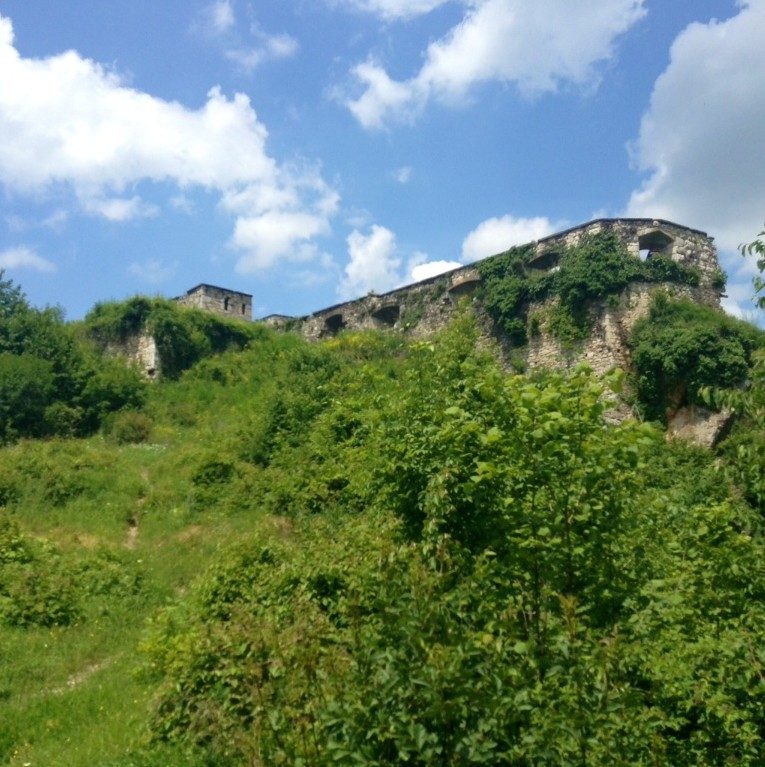
Zvornik fortress (Kula grad) above the town and the Drina
Zvornik fortress (Kula grad) above the Drina. The town was among the first seized and “cleansed” of its Bosniaks in April 1992. Photo: Sabahudin9 · CC BY-SA 3.0 · via Wikimedia Commons

At a glance

Location
Zvornik, eastern Bosnia (Drina border crossing)
Period
8–9 April 1992 onward
Perpetrators
JNA, Serb Territorial Defence, and paramilitaries (Arkan's Tigers, White Eagles, Yellow Wasps)
Victims
Bosniak civilians
Killed
3,936 killed or missing in the municipality (RDC), incl. 2,017 Bosniak civilians; ~700–900 in the opening days
Massacre sites
Bijeli Potok / Đulići (~675); Drinjača (~88); Karakaj (~160)
Displaced
~40,000 Bosniaks expelled (municipal non-Serb population fell from ~31,000 to under 1,000)
Legal status
Crimes against humanity, persecution
Key cases
Šešelj; Yellow Wasps; cited in Karadžić and Milošević

Summary

Zvornik, a town commanding a crossing of the Drina on the border with Serbia, was among the first targets of the campaign in eastern Bosnia. On 8–9 April 1992 it was attacked and seized by an array of Serb forces — the Yugoslav People's Army (JNA), local Serb Territorial Defence units, and paramilitaries including Željko Ražnatović "Arkan's" Tigers, the White Eagles, and the "Yellow Wasps." The town's large Bosniak population was killed, interned, or driven across the lines; over the following weeks the surrounding villages were systematically cleansed. The geography mattered: control of Zvornik secured the corridor linking Serbia to Serb-held territory in Bosnia, making its "cleansing" a strategic priority.

The Seizure and the Killing Sites

After the fall of the town, Bosniaks from Zvornik and its hinterland were rounded up at collection points and detained in schools, factories, and other improvised camps, where many were beaten and killed. The judicial and documentary record identifies a series of mass killings in late May and June 1992:

  • Bijeli Potok / Đulići (1 June 1992) — men separated from a group of villagers assembled at Đulići were taken to the Gero's slaughterhouse and other sites and killed; accounts record on the order of 675 Bosniak men and boys murdered in this episode.
  • Drinjača (June 1992) — around 88 men were killed at the local school and cultural hall.
  • Karakaj / the Technical School — approximately 160 men were shot in a single massacre, with very few survivors.

Detainees were also held at the Ekonomija farm and Ciglana brickworks; survivors were eventually transported out of the region or used in prisoner exchanges.

Counting the Dead and the Displaced

The Research and Documentation Center in Sarajevo documented 3,936 people killed or missing in the Zvornik municipality across the war, of whom 2,017 were Bosniak civilians. The narrower term "Zvornik massacre" is sometimes used for the killing of roughly 700–900 Bosniaks in the opening days of the assault. The demographic transformation was near-total: an estimated 40,000 Bosniaks were expelled, and the combined Bosniak and Croat population of the municipality fell from about 31,000 in 1991 to fewer than 1,000 by 1997.

The Legal Reckoning

Crimes in Zvornik featured in several major ICTY proceedings. The paramilitary leader Vojislav Šešelj and members of the "Yellow Wasps" (including Dušan Vučković, "Repić") were prosecuted in connection with the violence, and the Zvornik takeover formed part of the evidentiary basis for the persecution and extermination charges against the Republika Srpska leadership in Prosecutor v. Karadžić and in the case against Slobodan Milošević (terminated by his death in 2006). Domestic war-crimes courts in Bosnia and Serbia have since tried a number of lower-level perpetrators. As with most of the 1992 eastern-Bosnia campaign, the courts entered convictions for crimes against humanity and persecution rather than genocide.

Scholarly Analysis

The template established

Zvornik, attacked within days of the war's outbreak, is in many ways the template from which the rest of the eastern campaign was struck. Every element later seen across the Podrinje appears here in compressed form: the coordination of the regular army with deniable paramilitaries; the separation of men for killing and the deportation of women and children; the use of schools and factories as ad-hoc camps; and the strategic logic of clearing a contiguous corridor of territory. Studying Zvornik is therefore studying the campaign's grammar.

The role of the paramilitaries

The prominence of Arkan's Tigers and the Yellow Wasps at Zvornik illustrates a recurring feature of the genocide: the outsourcing of the most visible atrocities to paramilitary formations that maintained plausible deniability for the state and the regular army while operating in close coordination with them. This division of labour — army provides the artillery and the cordon, paramilitaries provide the terror — was central to the campaign's deniability and remains a key analytical lens for understanding command responsibility.

The arithmetic of erasure

The collapse of the Bosniak-Croat population from 31,000 to under 1,000 is the kind of statistic that can numb rather than convey. Its meaning is that an entire society — its families, mosques, schools, businesses, and cemeteries — was removed from a place its members had inhabited for centuries, in the span of a few years. This is the measurable signature of ethnic cleansing: not merely deaths, but the disappearance of a community as a living presence on the land.

The Deception at Đulići

The Bijeli Potok massacre began with a deception. On 31 May 1992 the Bosniaks of the Klisa and Đulići communities were told they would be evacuated to safety at Sapna; instead, the able-bodied men were separated at the Karakaj technical school, bused to Pilica and back, and taken to an old slaughterhouse near the Drina, where they were killed. Some 675 men and boys died over the following week, between 176 and 188 of them from the village of Đulići alone. In 2003 the Crni Vrh mass grave was uncovered, holding the remains of 629 victims of the Zvornik-area and Srebrenica killings. For many families, the remains of those taken on 1 June 1992 have never been recovered.

Sources: "Bijeli Potok massacre," Wikipedia; Balkan Insight — Zvornik massacres anniversary.

Sources and References

"Zvornik massacre," Wikipedia (overview and casualty figures). Available at: https://en.wikipedia.org/wiki/Zvornik_massacre

"Bijeli Potok massacre," Wikipedia. Available at: https://en.wikipedia.org/wiki/Bijeli_Potok_massacre

Balkan Insight, "Bosniak Survivors Mark Zvornik Massacres Anniversary" (2015). Available at: balkaninsight.com — Zvornik massacres anniversary

"Ethnic cleansing in the Bosnian War," Wikipedia (Research and Documentation Center municipal figures). Available at: en.wikipedia.org/wiki/Ethnic_cleansing_in_the_Bosnian_War

See also the relevant portions of the ICTY judgment in Prosecutor v. Radovan Karadžić (IT-95-5/18), accessible through the IRMCT case archive.