← The Bosnian Genocide / Eastern Bosnia
The opening massacre of the war — and the photographs that told the world what was coming
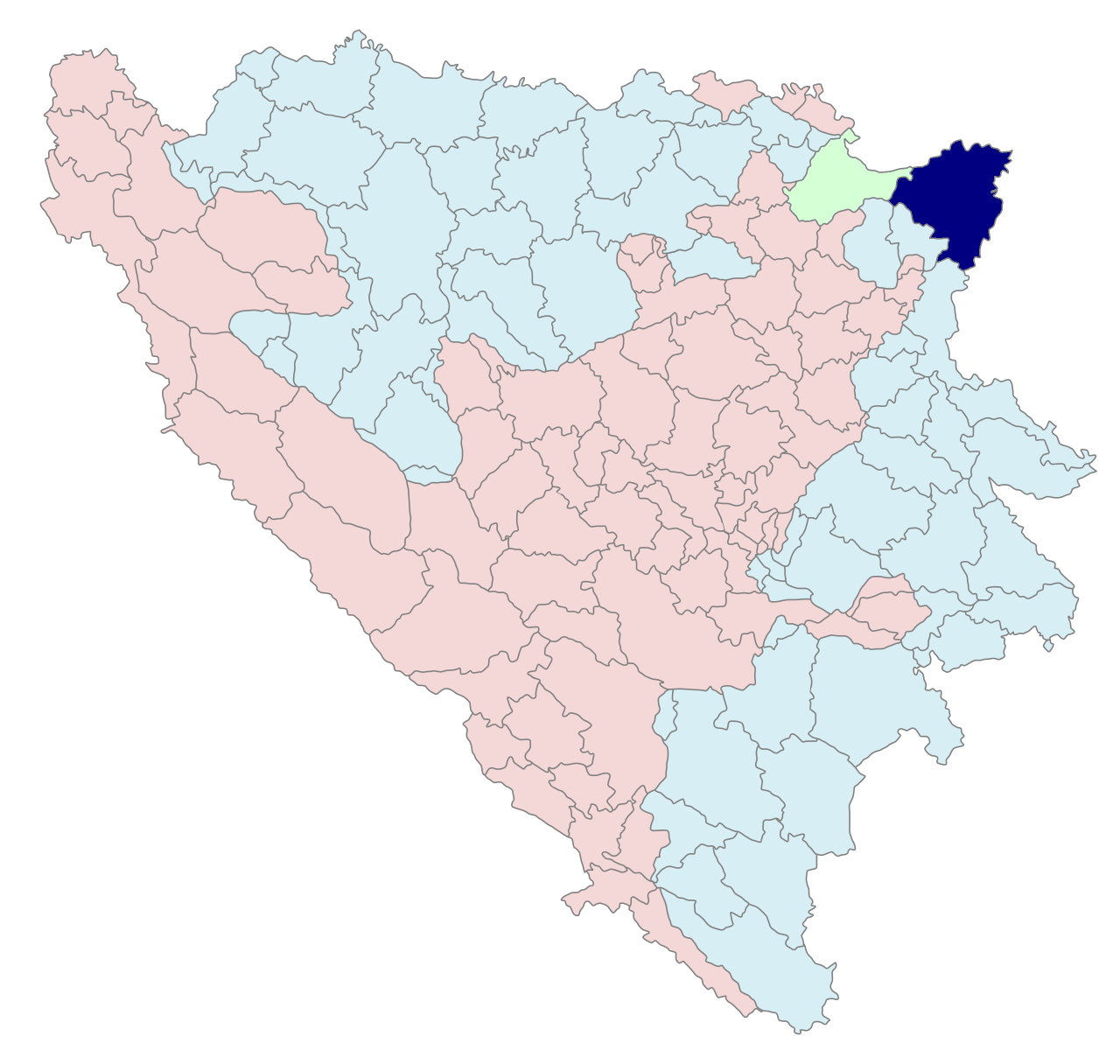
Bijeljina, a town in the flat, fertile Semberija region of northeastern Bosnia, was the first place to fall in the Bosnian War. On 1–2 April 1992 — before the war had even formally begun — the Serbia-based paramilitary Serb Volunteer Guard, Željko "Arkan" Ražnatović's "Tigers," together with a local group known as "Mirko's Chetniks," seized the town and killed civilians, the great majority of them Bosniaks. The attack inaugurated the pattern that would define the next three years and announced, with brutal clarity, the intentions of the campaign to come.
What sets Bijeljina apart is that the world saw it almost immediately. The American photojournalist Ron Haviv photographed Arkan's Tigers among the bodies of dead civilians — one image, of a fighter appearing to kick a dead woman, became among the most reproduced of the entire war.
The killings were swift and public. Bodies of men, women, and children were collected from the streets and houses of Bijeljina in the days that followed. The seizure of the town was strategically important: Bijeljina sat astride the routes linking Serbia to the Serb-held areas of northern and eastern Bosnia, and its early "cleansing" helped secure the corridor that made the wider campaign possible.
The violence did not end with the initial massacre. Over the following years the non-Serb population of Bijeljina and the neighbouring town of Janja was subjected to systematic persecution — harassment, extortion, forced labour, and waves of expulsion documented in detail by Human Rights Watch — until the once-substantial Bosniak community had been largely driven out. The cumulative toll across the war, as recorded by the Research and Documentation Center, runs to roughly a thousand dead.
Accountability for Bijeljina has been strikingly incomplete. Arkan was secretly indicted by the ICTY in 1997, but he was assassinated in a Belgrade hotel in January 2000 before he could be brought to trial, and the indictment's contents were only then made public. Many members of his Tigers were never prosecuted by any court. The Bijeljina events nonetheless formed part of the evidentiary record in the cases against the Republika Srpska and Serbian leadership, including Karadžić and the unfinished trial of Slobodan Milošević. The relative impunity of the perpetrators has made Bijeljina a recurring point of grievance in the search for justice.
Bijeljina is, in retrospect, the clearest early warning of the war's character — and a case study in the failure of early warning to produce early action. Haviv's photographs were published worldwide within weeks. The identity of the perpetrators (a paramilitary openly sponsored from Serbia), the identity of the victims (unarmed Bosniak civilians), and the method (massacre followed by expulsion) were all visible from the very first days. That more than three years of atrocity, culminating in Srebrenica, were nonetheless allowed to unfold is central to the moral history of international non-intervention in Bosnia.
The wide gap between the ICTY's conservative minimum of 52 and the RDC's figure of around 1,040 is not a contradiction but a reflection of what each number measures: the former counts deaths the Tribunal could attribute to specific charged conduct, the latter counts all documented war-related deaths in the municipality over three years. The persistence of this uncertainty — and the fact that so few perpetrators were ever tried — illustrates how impunity and evidentiary fog reinforce one another, leaving the historical record of even the war's first crime incomplete.
On 1–2 April 1992 the American photojournalist Ron Haviv accompanied Arkan's Tigers into Bijeljina and photographed the killing of civilians — most infamously an image of a uniformed fighter appearing to kick a dead Bosniak woman lying in the street among the bodies of the slain. Published around the world within weeks, the photographs were the first clear warning of the character of the war to come. Yet they brought no rescue and little justice: Željko "Arkan" Ražnatović was only secretly indicted by the ICTY in 1997 and was assassinated in Belgrade in January 2000 before he could be tried; most of his Tigers were never prosecuted. Bijeljina stands at the head of the war as both its first atrocity and an early emblem of the impunity that would follow.
Source: Balkan Insight — Arkan's Tigers Unpunished; HRW — The Take-Over of Bijeljina.
"Bijeljina massacre," Wikipedia. Available at: https://en.wikipedia.org/wiki/Bijeljina_massacre
Human Rights Watch, "Unfinished Business: The Take-Over of Bijeljina and Janja" (2000). Available at: hrw.org — Unfinished Business
Balkan Insight, "Arkan's 'Tigers' Unpunished 20 Years after Leader's Death" (2020). Available at: balkaninsight.com — Arkan's Tigers Unpunished
See also the relevant portions of the ICTY judgment in Prosecutor v. Radovan Karadžić (IT-95-5/18), accessible through the IRMCT case archive.