← The Bosnian Genocide / Eastern Bosnia
Ethnic cleansing in the Drina valley and the organized “rape camps” that produced one of international law’s most important judgments on sexual violence
Foča, a town on the Drina in southeastern Bosnia with a slight Bosniak majority before the war, was seized by Serb military, police, and paramilitary forces beginning on 7 April 1992. Over the following months its Bosniak population was killed, interned, expelled, and — in the case of women and girls — subjected to a regime of systematic rape and sexual enslavement organized in identifiable detention sites. The campaign was so thorough that the town was, for a time, renamed "Srbinje" ("the Serb place"). By one estimate around 21,000 non-Serbs had left Foča by mid-1992.
Foča holds a distinct place in legal history. The ICTY's judgment in Prosecutor v. Kunarac, Kovač and Vuković (2001) was the first international conviction to treat rape and enslavement as crimes against humanity in their own right, establishing that systematic sexual violence is an instrument of atrocity, not its incidental by-product.
As elsewhere in eastern Bosnia, the seizure of Foča was followed by the separation of the population by sex. Men were detained in the Foča Kazneno-Popravni Dom (KP Dom), a large former prison, where hundreds of Bosniak men were held in brutal conditions, tortured, and killed; many were taken away and never seen again. Women, children, and the elderly were held at other locations — among them the Partizan Sports Hall in the town centre, near the municipal building and police station, and a number of houses and apartments commandeered as soldiers' quarters.
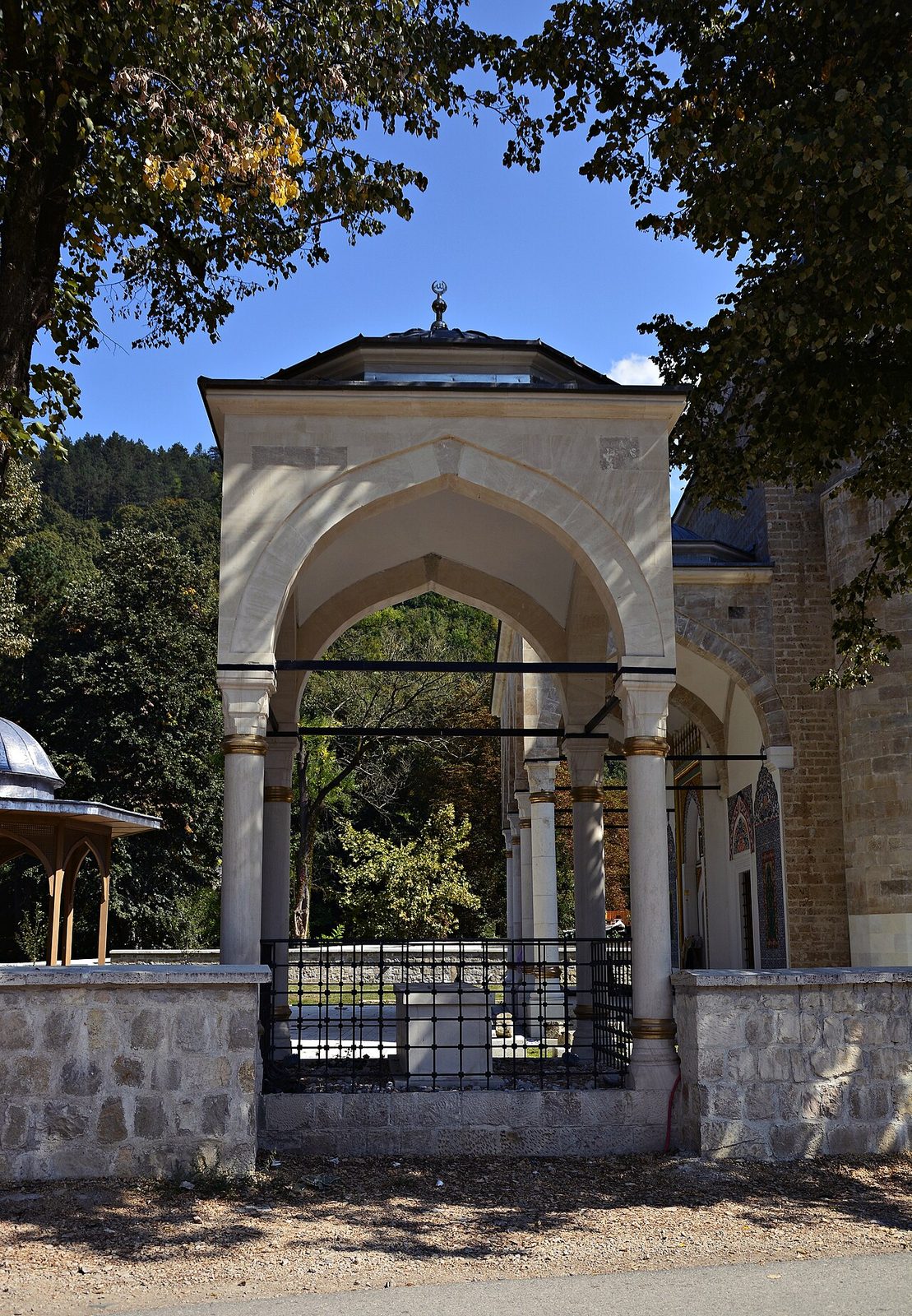
It was at these sites that the systematic rapes took place. Women and girls — some as young as twelve to fifteen — were selected, removed to apartments and houses such as the one at Osman Đikić Street No. 16, and repeatedly raped, in some cases held in conditions amounting to sexual slavery and "sold" or transferred between soldiers. The destruction of Foča's mosques, including the historic Aladža mosque (1550), accompanied the assault on the population.
According to the Research and Documentation Center in Sarajevo, 2,707 people were killed or went missing in the Foča municipality during the war. Of these, the RDC recorded 1,513 Bosniak civilians and 155 Serb civilians among the dead and missing — a ratio that captures the asymmetry of the violence. The number of women subjected to rape in Foča cannot be stated with precision, but the ICTY found that the practice was widespread, systematic, and integral to the campaign of expulsion: sexual violence was used to terrorize the community and to ensure that those driven out would not return.
For most of the history of warfare, mass rape was treated — when it was acknowledged at all — as an unfortunate by-product of military breakdown, the "spoils" of conquering armies. The Foča case marks the moment that international law decisively rejected this framing. The ICTY found that the rapes were not the disorder of an army out of control but an ordered and systematic instrument deployed to achieve a political objective: the permanent removal of a population. In genocide-studies terms, sexual violence in Foča functioned as a technology of destruction — degrading and dispersing the community, severing its members from one another, and inscribing terror onto the bodies of its women.
Foča illustrates with stark clarity the gendered division of the cleansing process. Men were destroyed primarily through killing and disappearance; women were destroyed primarily through rape, enslavement, and forced displacement. Both were aimed at the same end — the destruction of the group as a viable community — but they operated through different means upon different bodies. Any analysis that counts only the killed misses half of what was done at Foča.
The wartime renaming of Foča to "Srbinje" is a small but revealing datum. Ethnic cleansing seeks not only to remove a population but to erase the evidence that it was ever there: hence the destruction of mosques, graveyards, and place-names alongside the killing of people. The post-Dayton restoration of the name Foča, and the rebuilding of the Aladža mosque, are correspondingly acts of counter-erasure — part of the long contest over memory that follows every genocide.
The Kunarac trial rested on the testimony of the women who survived. One, known to the court as Witness 50, was held first at the Foča High School and then at the Partizan Sports Hall, where some sixty detainees — women and children, and but for two elderly men all Muslim — were confined; she described how Serb soldiers came to "pick out girls" and take them away to be raped. Witness 87 testified that the soldiers "would come inside looking for particular persons, girls… They would select them, as many as they wanted, and then they would take them with them," every night or every other night. On the strength of such testimony the Tribunal convicted Dragoljub Kunarac (28 years), Radomir Kovač (20), and Zoran Vuković (12 years, for the rape of Witness 50).
Source: ICTY — Witness 50 and Witness 87; Prosecutor v. Kunarac, Kovač and Vuković (IT-96-23 & 23/1).
ICTY, "Facts about Foča" and the Kunarac et al. judgment summary. Available at: icty.org — "Facts about Foča" (PDF)
Human Rights Watch, "Bosnia and Hercegovina: A Closed, Dark Place" (1998), on Foča. Available at: hrw.org/legacy/reports98/foca
The Hague Justice Portal, "The Foča 'Rape Camps': A dark page read through the ICTY's jurisprudence." Available at: haguejusticeportal.net — Fiori (PDF)
"Foča ethnic cleansing," Wikipedia (RDC casualty figures and overview). Available at: en.wikipedia.org/wiki/Foča_ethnic_cleansing
See also the ICTY judgments in Prosecutor v. Kunarac, Kovač and Vuković (IT-96-23 & 23/1) and Prosecutor v. Krnojelac (IT-97-25), accessible through the IRMCT case archive.