← The Bosnian Genocide / Central Bosnia · the Vrbas
A town renamed to erase it — the cleansing of the upper Vrbas and the long road to return
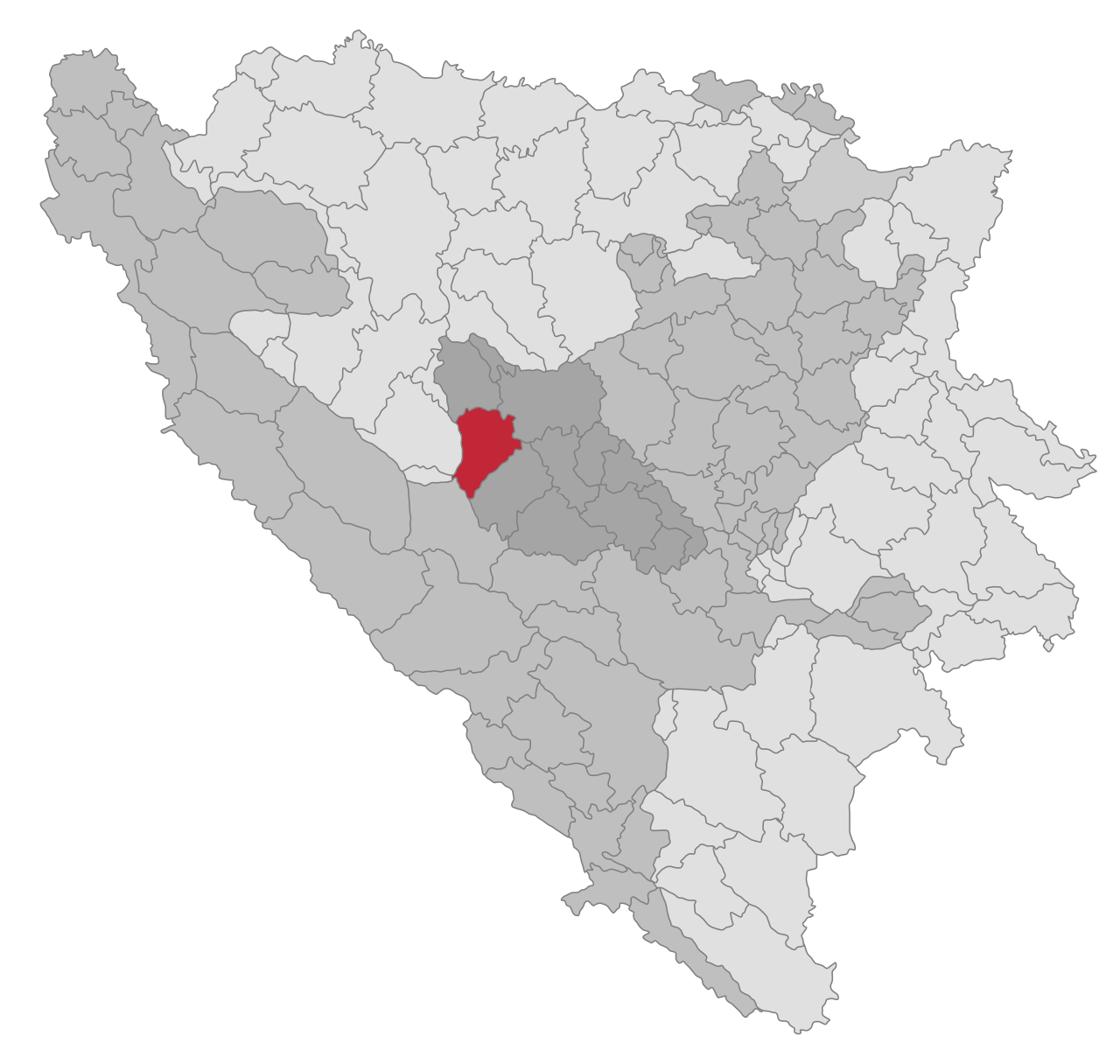
Donji Vakuf, in the upper Vrbas valley, was seized by Serb forces in 1992 and held until near the war's end. Its Bosniak population — about 13,500 people before the war — was subjected to expulsion and attack, with up to eighty percent fleeing the municipality, many to neighbouring Bugojno. In a gesture that distilled the campaign's intent, the Serb authorities renamed the town "Srbobran" ("Serb defender"), an attempt to write the Bosniak past out of the very name of the place. Donji Vakuf was retaken by the Bosnian army on 14 September 1995, in the offensives that ended the war.
Through 1992 the Bosniak villages of the municipality, among them Sokolina, were attacked, and the population driven from the upper Vrbas. The renaming of Donji Vakuf to "Srbobran" belongs to the same family of acts as the wartime renaming of Foča to "Srbinje": ethnic cleansing pursued not only in flesh and stone but in language, seeking to erase the toponymic evidence of a community's centuries of presence. For three years the town existed under this imposed name, its mosques destroyed, its Bosniaks scattered. Its liberation in September 1995 restored the name and opened the long, partial process of return.
The renaming of conquered towns — Donji Vakuf to "Srbobran," Foča to "Srbinje" — is a small but revealing technology of ethnic cleansing. A name is the most portable form of memory; to change it is to claim that the place was always, and only, Serb, and that the expelled were never truly there. Such acts demonstrate that the campaign aimed not merely at the removal of people but at the rewriting of history itself — the manufacture of a past to justify the engineered present. The restoration of the old names after 1995 was, correspondingly, an early act of historical justice.
Donji Vakuf is also one of the cases where the military outcome of the war reversed the cleansing, at least territorially: the town was retaken, the name restored, and return became possible. This distinguishes it from the eastern enclaves, where the cleansing was sealed by genocide and the demographic transformation made permanent. The contrast is instructive: it shows that the permanence of ethnic cleansing was not a law of nature but a function of who held the ground when the guns fell silent — and it underscores how much, at Srebrenica and across the Podrinje, was lost precisely because the ground was never retaken.
For more than three years Donji Vakuf existed under an imposed name, "Srbobran." Its Bosniak villages, among them Sokolina, were attacked and emptied; up to four-fifths of a pre-war Bosniak population of some 13,500 were driven out, many to neighbouring Bugojno. When Bosnian government forces retook the town on 14 September 1995, the old name was restored and a slow return began — though, as across much of the upper Vrbas valley, the rebuilding of destroyed mosques and homes and the return of the displaced have remained partial and contested.
Source: "Donji Vakuf," Wikipedia (wartime history and the "Srbobran" renaming).
"Donji Vakuf," Wikipedia (wartime history and the "Srbobran" renaming). Available at: https://en.wikipedia.org/wiki/Donji_Vakuf
"Sokolina, Donji Vakuf" (attacks on Bosniak villages of the municipality). Reference overview at: en.wikipedia.org/wiki/Ethnic_cleansing_in_the_Bosnian_War
See also the related entries on the fall of Jajce and Banja Luka.