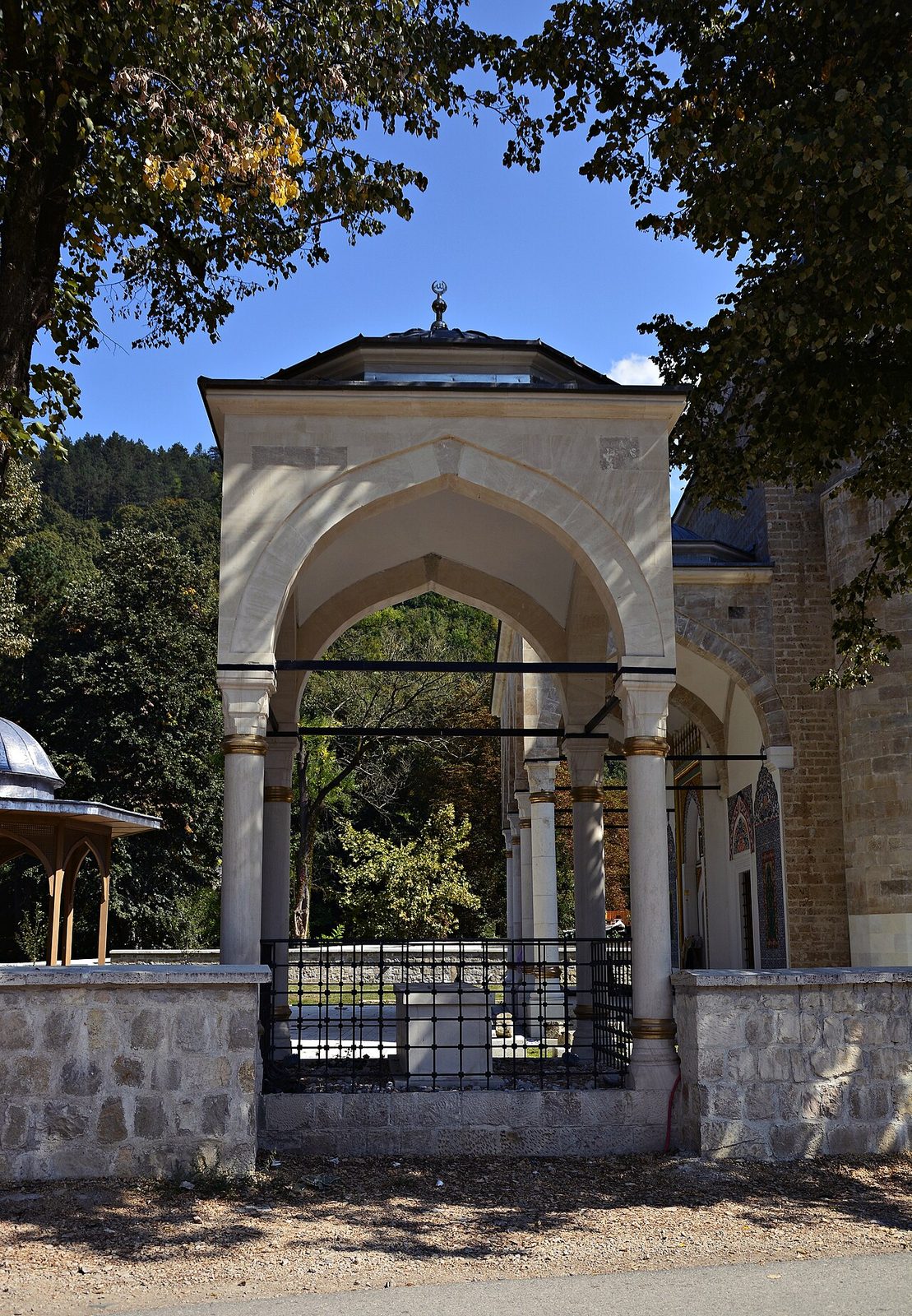
The reconstructed Aladža Mosque in Foča
Foča, whose organized "rape camps" produced the ICTY's landmark Kunarac judgment. The town's Aladža mosque, destroyed in 1992, was rebuilt in 2019. Photo: Ceca Novakovic · CC BY-SA 4.0 · via Wikimedia Commons

A Weapon, Not a By-Product

Estimates of the number of women and girls raped during the Bosnian war range from 20,000 to 50,000. This was not the disorder of armies out of control. Across the campaign — at Foča, Višegrad, Doboj, Prijedor, and elsewhere — sexual violence was organized, systematic, and directed to a political end: the terrorizing and permanent expulsion of a population. International law would come to recognize it as exactly that.

The Rape Camps of Foča

In Foča, Bosnian Serb forces established locations — the Partizan Sports Hall in the town centre, and houses and apartments commandeered as soldiers' quarters — in which women and girls, some as young as twelve, were held and repeatedly raped, in conditions amounting to sexual slavery, with detainees "sold" or transferred between soldiers. The same pattern recurred at Višegrad and at the Bosanka factory in Doboj, where, survivors testified, men were bused from Serbia for the purpose. These were not incidental crimes but functioning institutions of the cleansing.

The Kunarac Judgment

On 22 February 2001, in Prosecutor v. Kunarac, Kovač and Vuković, the ICTY convicted three men of crimes against humanity including rape, torture, and enslavement. It was the first international conviction to treat rape as a crime against humanity in its own right, and the first to recognize enslavement on the basis of sexual servitude. Together with the earlier finding (in the Čelebići and Furundžija cases) that rape can constitute torture under international law, the Foča judgment decisively rejected the centuries-old treatment of wartime rape as an unfortunate by-product of conflict, the "spoils" of conquering armies.

Scholarly Analysis

Sexual violence as a technology of destruction

In the terms of genocide studies, rape in Bosnia functioned as an instrument of destruction. It terrorized communities into flight; it degraded and dispersed them; it severed their members from one another; and it inscribed the campaign's domination onto the bodies of its women. Where killing destroyed the men of a community, sexual violence was directed primarily at its women — the two operating through different means upon different bodies toward the same end, the destruction of the group as a viable community. Any account that counts only the dead misses half of what was done.

The gendered architecture of cleansing

The Bosnian genocide divided its violence by sex with stark clarity: men were destroyed chiefly through killing and disappearance, women chiefly through rape, enslavement, and forced displacement. Understanding this gendered structure is essential to understanding the campaign as a whole — and to recognizing the women of Foča and Višegrad not as incidental victims but as deliberately chosen targets.

The long aftermath

For survivors the harm did not end with the war. Many endured lasting trauma, social stigma, and decades-long struggles for recognition and reparation; children born of wartime rape have carried their own burden. The slow, incomplete process by which Bosnian society and the law have come to acknowledge these crimes is part of the broader contest over memory.

A precedent that outlived the war

The Foča precedent reshaped international criminal law far beyond the Balkans. It underwrote the prosecution of sexual violence at the Rwanda tribunal and the permanent International Criminal Court, and it established, as a matter of law, that those who deploy rape as an instrument of atrocity are as accountable as those who kill. That a handful of houses in a small Drina town should have helped redefine the global law of war is a measure of how the crimes of Bosnia reverberated through the whole system of international justice.
Sources and References

ICTY, Prosecutor v. Kunarac, Kovač and Vuković (IT-96-23 & 23/1) and "Facts about Foča." Available at: icty.org — Facts about Foča (PDF)

The Hague Justice Portal, "The Foča 'Rape Camps'." Available at: haguejusticeportal.net (PDF)

See also the place pages on Foča, Višegrad, and Doboj.