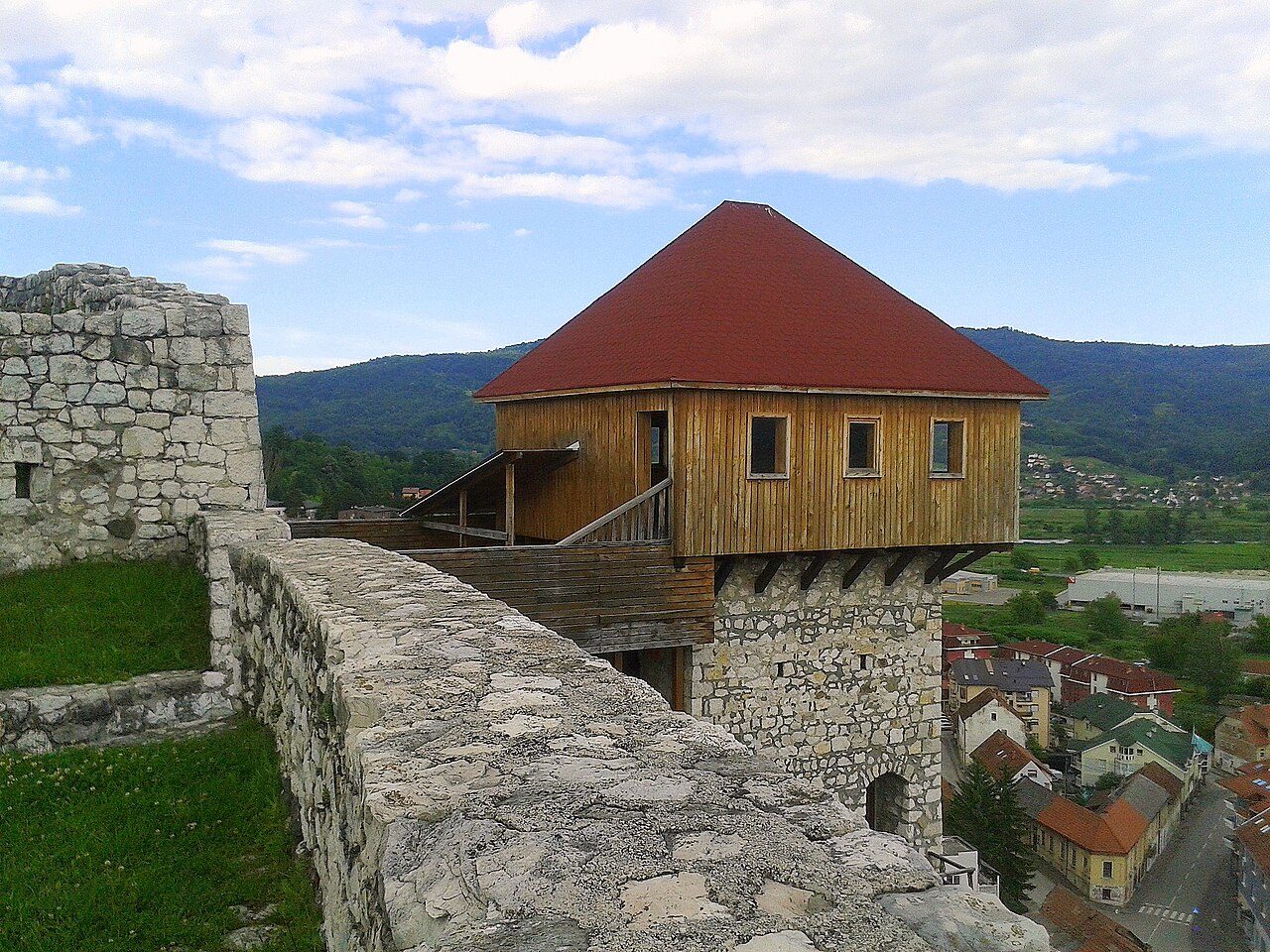
The medieval Gradina fortress above Doboj
The medieval Gradina fortress above Doboj, the northern rail hub where Bosniaks were detained, abused, and used as forced labour and human shields in 1992. Photo: Aleksandra Đuričić · CC BY-SA 4.0 · via Wikimedia Commons

At a glance

Location
Doboj, northern Bosnia (a key rail and road junction)
Period
From May 1992
Perpetrators
VRS, Bosnian Serb police and paramilitaries, with local SDS authorities
Victims
Bosniak and Bosnian Croat civilians
Detention
The Perčin Disco, a former JNA warehouse, the Grapska school, and the Bosanka factory (used as a rape camp)
Killed
2,323 killed or missing in the municipality (RDC); at least 17 detainees killed while used as human shields
Displacement
Of 40,000+ Bosniaks recorded pre-war, only ~1,000 remained
Legal status
Crimes against humanity; cited in ICTY leadership cases

Summary

Doboj, a major transport hub in northern Bosnia, was seized by Serb forces in May 1992. The non-Serb population was disarmed and arrested en masse; homes and property were looted and destroyed, and the town's mosques were razed. Detainees were held at a network of improvised camps and subjected to beatings, torture, rape, and forced labour. Two features make Doboj especially grave even within the catalogue of 1992: the operation of an organized rape camp at the Bosanka juice-and-jam factory, and the systematic use of detainees as human shields on the front lines.

Camps, Rape, and Human Shields

Non-Serbs who were not killed outright were confined at sites including the Perčin Disco, a former JNA warehouse, and the school at Grapska, in conditions of severe overcrowding and abuse. At the Bosanka factory complex, women were held and systematically raped; survivor and court accounts describe men being bused in from in and around Belgrade for that purpose — a stark illustration of the organized, cross-border character of the sexual violence.

Doboj is also one of the clearest documented instances of the use of human shields. Detainees from the Perčin Disco were taken to the front lines and placed in the line of fire to protect Serb forces; at least 17 of them were killed. The practice was so emblematic that it later figured in the retrial of senior Serbian state-security officials, where Doboj survivors testified.

The Legal Reckoning

The crimes in Doboj formed part of the persecution and extermination charges in the ICTY cases against Radovan Karadžić and Ratko Mladić, and the use of human shields featured in the prosecution of the Serbian State Security officials Jovica Stanišić and Franko Simatović. Individual perpetrators have also been tried before the War Crimes Chamber of the Court of Bosnia and Herzegovina. As with most of the 1992 northern-Bosnia campaign, convictions were entered for crimes against humanity rather than genocide.

Scholarly Analysis

The human shield and the inversion of protection

The use of human shields at Doboj represents a particularly cynical perversion of the laws of war. Those laws exist to shield civilians from the violence of combat; at Doboj, civilians were instead forced into the violence as a screen for combatants. This inversion — turning the protected into the protective barrier — reveals the totality of the dehumanization at work: the victims were treated not even as enemies to be killed, but as material to be expended. It is among the gravest categories of war crime precisely because it weaponizes the very humanity the law seeks to protect.

Cross-border organization of rape

The reported transport of perpetrators from the Belgrade area to the Bosanka factory to commit rape is a detail of considerable analytical weight. It indicates that the sexual violence was not merely the local excess of soldiers but an organized practice with logistical support reaching across the border into Serbia. Like the movement of paramilitaries and weapons documented elsewhere, it speaks to the integrated, supra-local character of the campaign and bears on the contested question of external state involvement.

The Human Shields of Makljenovac

On 12 July 1992, special units of Serbia's State Security took non-Serb detainees from the Doboj camps to the front line at Makljenovac and placed them in the line of fire; about twenty-seven were killed. The paramilitary "Predini vukovi" (Predo's Wolves) marched some fifty detainees from the camp, of whom sixteen died. Edin Hadžović, who survived, recounted the killings before the Hague Tribunal in 2018; the widow Senada Ahmić testified simply: "I found out that my husband had been used as a human shield. He was killed on July 12, 1992." To force the captive to shield the captor is among the gravest of war crimes.

Sources: Balkan Insight — Bosnian "Human Shield"; IWPR — Serb Forces Accused of Using Human Shields.

Sources and References

"Doboj ethnic cleansing (1992)," Wikipedia. Available at: en.wikipedia.org/wiki/Doboj_ethnic_cleansing_(1992)

Balkan Insight, "Bosnian 'Human Shield' Hopes for Serbian Security Chiefs' Conviction" (2021). Available at: balkaninsight.com — Doboj human shields

Detektor, "Bosnian Activists Mark Wartime Detention Camp Sites" (2021). Available at: detektor.ba — Doboj camp sites

See also the ICTY judgments in Prosecutor v. Karadžić (IT-95-5/18) and Prosecutor v. Stanišić & Simatović (IT-03-69), accessible through the IRMCT case archive.