← The Bosnian Genocide / Sarajevo · the southern suburbs
The cleansing of the Serb-held southern Sarajevo suburbs — the sports hall, the Kula camp, and the “Monster of Grbavica”
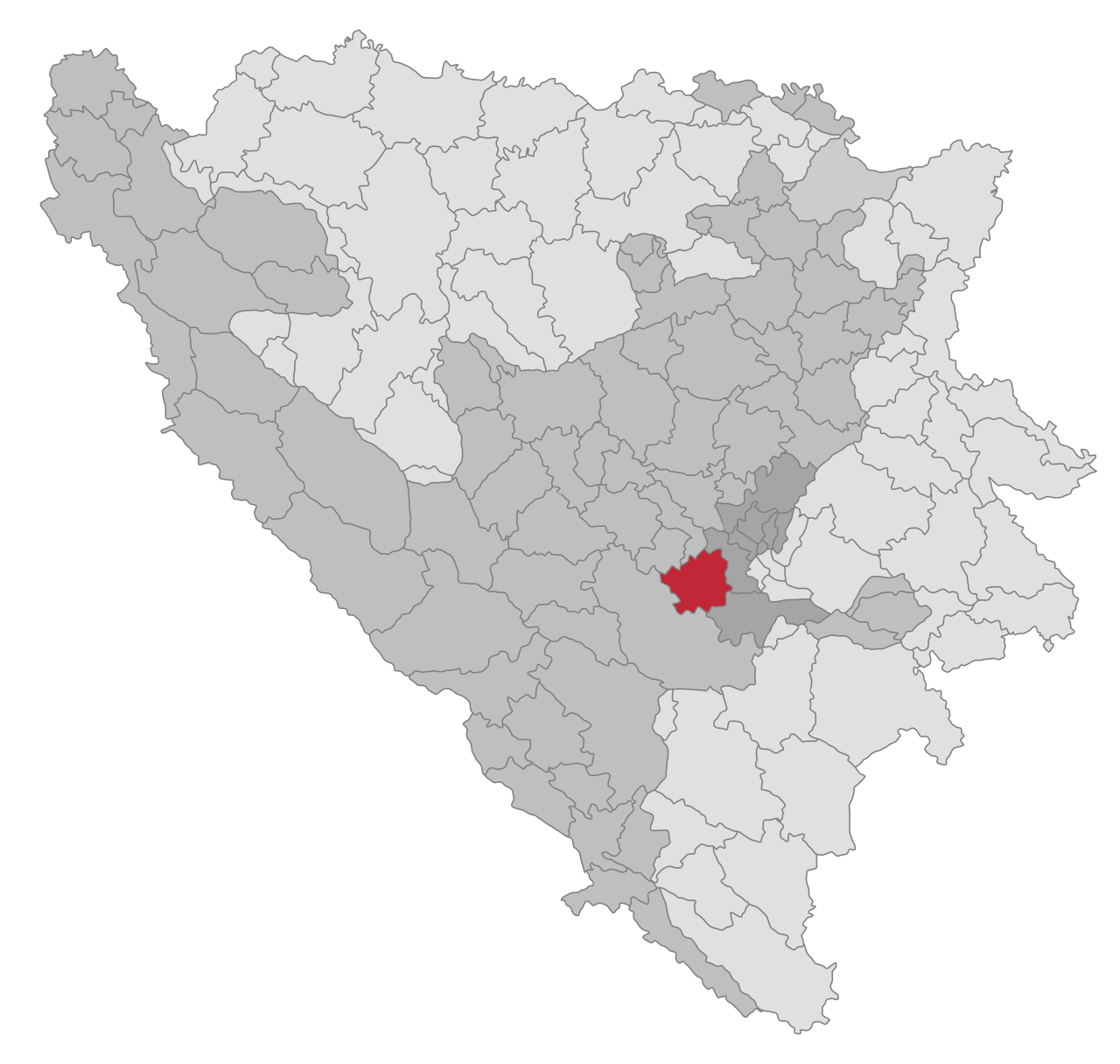
The ring of Serb-held suburbs around Sarajevo had a southern and western arc — Hadžići and Ilidža, and the front-line district of Grbavica within the city — where the Bosniak population was subjected to detention, forced labour, disappearance, and terror. (The northern arc, Vogošća and Ilijaš, is treated in a companion entry.) After seizing Hadžići in 1992, Bosnian Serb forces rounded up hundreds of Bosniaks and held them in improvised camps; many were transferred to the Kula facility at Ilidža and used as forced labour on the front lines. In Grbavica, a paramilitary reign of terror became infamous through the crimes of Veselin Vlahović, "Batko."
From 15 May 1992, Bosnian Serb forces in Hadžići rounded up hundreds of Bosniaks and confined them in improvised jails — a garage and, above all, the local sports hall, the town's largest detention site — where they were physically and psychologically tortured and starved. From 25 June 1992, detainees were transferred to the Kula camp at Ilidža, in present-day East Sarajevo, where they were forced to dig trenches and fell trees on the front lines for the VRS, to carry the dead and wounded, and to loot Bosniak homes in Gornji Kotorac and Grbavica. Forty-six prisoners taken from the barracks were never seen again; the remains of some 160 victims of the town have since been recovered from mass graves around East Sarajevo, Hadžići, and Mount Igman, while around 90 people remain missing.
In the front-line district of Grbavica, held by Serb forces throughout the siege, a paramilitary unit committed murders, rapes, torture, and robberies across the Grbavica, Kovačići, and Vraca neighbourhoods. The most notorious perpetrator, Veselin Vlahović — "Batko," the "Monster of Grbavica" — was eventually convicted by the Court of Bosnia and Herzegovina of crimes against humanity and sentenced to a long prison term.
The crimes of the southern Sarajevo suburbs have been prosecuted before the War Crimes Chamber of the Court of Bosnia and Herzegovina — including cases addressing the Hadžići detentions and the Kula camp, and the conviction of Veselin Vlahović ("Batko") for the Grbavica crimes — and they formed part of the comprehensive Sarajevo case against the Bosnian Serb leadership in Karadžić and Mladić at the ICTY.
As at Vogošća and Doboj, the Kula camp turned captive Bosniak civilians into the forced labour force of the army besieging their own city — digging the trenches and felling the timber that sustained the encirclement of Sarajevo, and even being made to loot the homes of fellow Bosniaks. This closes a particularly cruel circle: the victims were compelled to build the instruments of their own community's suffering. It is among the clearest illustrations of how the siege of Sarajevo and the cleansing of its suburbs were two faces of a single operation.
The figure of "Batko" exemplifies a recurring pattern: the local strongman whose personal sadism becomes the public face of a district's suffering. It is important, however, not to let the monstrous individual obscure the system. Vlahović could rape and murder freely in Grbavica because the territory had been placed under the control of forces that licensed such terror against the Bosniak population. The individual perpetrator and the organized campaign are not alternatives; the former operated within, and in the service of, the latter.
When the men of Hadžići were herded into the town's sports centre on 22 June 1992, some three hundred were already inside. A list of the detainees had forty-nine names circled in red pencil; the next day, forty-eight of them were taken to an unknown place and have never been seen since. The rest were moved on 25 June to the Kula camp in present-day East Sarajevo, where for more than five months they dug trenches and felled trees on the front lines, carried the dead and wounded, and were forced to loot the homes of fellow Bosniaks. Almin Dželilović, twenty-one when he was imprisoned, is among the survivors who have testified; many of the perpetrators have never been tried.
Sources: Balkan Insight — Brutal Memories; Balkan Insight — Hadzici Feels Wartime Pain.
Balkan Insight, "Bosnia's Hadzici Feels Wartime Pain, 22 Years On" (2014) and "Bosnian Serb Ex-Soldier Charged over Prisoner Abuse, Killings" (2020). Available at: balkaninsight.com — Hadzici · Hadžići & Ilidža charges
Balkan Insight, "The Bloody Career of Bosnia's 'Monster of Grbavica'" (Veselin Vlahović "Batko"). Available at: balkaninsight.com — Monster of Grbavica
See also the related entries on the Siege of Sarajevo and Vogošća & the Sarajevo Ring, and the ICTY judgment in Prosecutor v. Karadžić (IT-95-5/18).