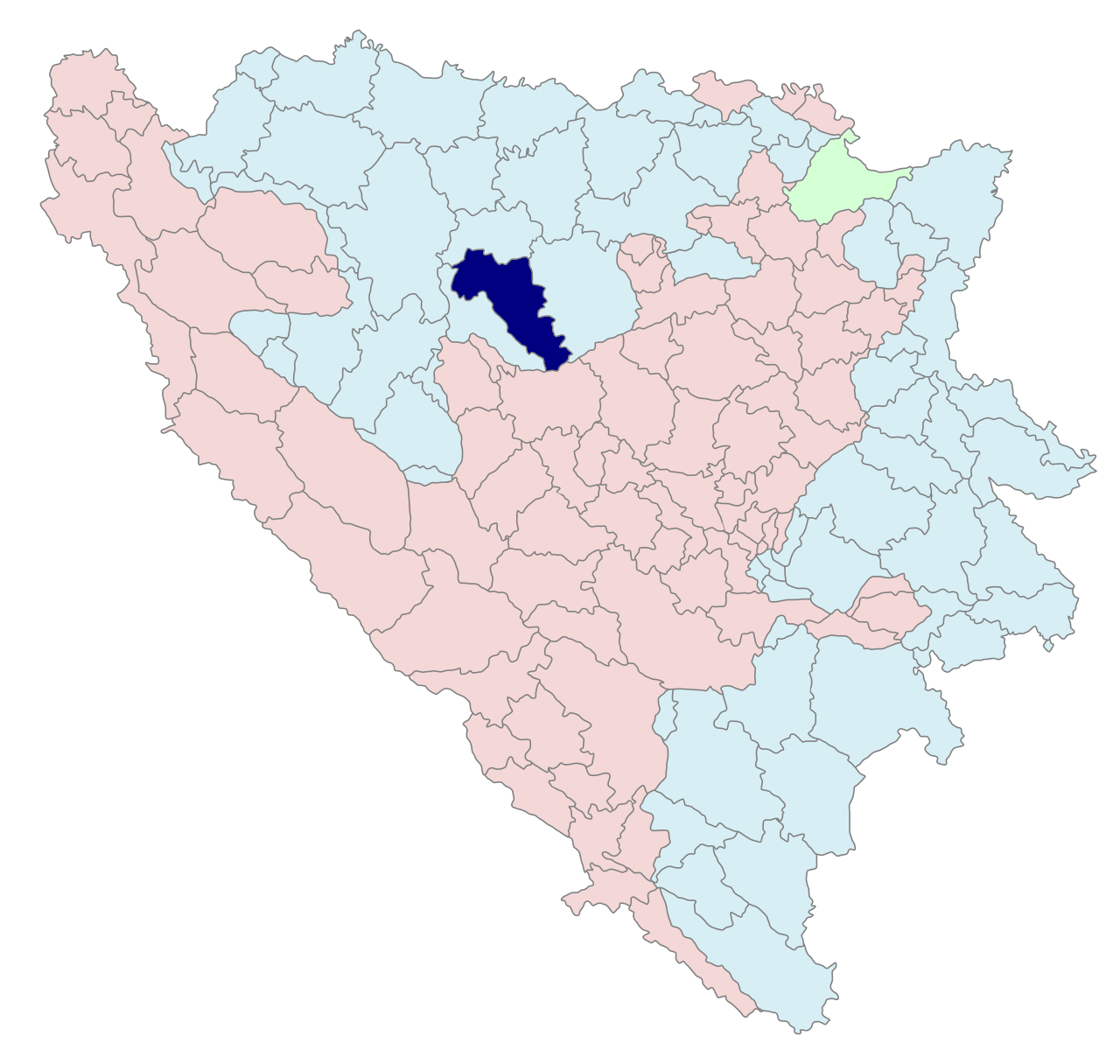
Location of Kotor Varoš municipality within Bosnia and Herzegovina
Location of the Kotor Varoš municipality, in the Vrbanja valley southeast of Banja Luka. Map: Andrein · Public domain · via Wikimedia Commons

At a glance

Location
Kotor Varoš, northwestern Bosnia (Vrbanja valley, ARK)
Period
From 11 June 1992
Perpetrators
VRS (1st Krajina Corps), Bosnian Serb police and paramilitaries
Victims
Bosniak and Bosnian Croat civilians
Scale
~5,000 persecuted; at least ~300 tortured and killed; many detained, abused and raped
Cultural destruction
All mosques and a Catholic church destroyed; villages of the Vrbanja valley sacked
Legal status
Crimes against humanity, persecution
Key cases
Brđanin; Talić; later arrests and trials in BiH (2015)

Summary

Kotor Varoš, a mixed municipality in the Vrbanja valley southeast of Banja Luka, was attacked and seized by Serb forces on 11 June 1992; the town's Croat mayor, Anto Mandić, was arrested as the takeover began. There followed a campaign of persecution against the municipality's Bosniak and Croat population: around 5,000 people were subjected to detention, abuse, robbery, and expulsion, and at least some 300 were tortured and killed. The villages of the Vrbanja valley were systematically sacked, and the municipality's mosques and a Catholic church in the town centre were destroyed.

Persecution and Destruction

The pattern at Kotor Varoš conformed closely to the Krajina template. Non-Serb men were rounded up and detained at facilities in and around the town — including the local sawmill and the medical centre — where killings, beatings, and torture took place; women were among those detained and, in cases documented by the courts, raped. The destruction was both human and cultural: nearly all the houses of the Čaršija (the old bazaar quarter) were demolished, and the obliteration of the town's mosques and its Catholic church signalled the intent to erase every trace of the non-Serb communities. By the time the campaign subsided, most of the Bosniak and Croat population had been killed or driven from the municipality.

The Legal Reckoning

Kotor Varoš was charged as one of the municipalities in the ARK-wide persecution case against Radoslav Brđanin and the indictment of General Momir Talić, and it featured in the cases against Karadžić and Mladić. National accountability has continued: in 2015 the Bosnian authorities arrested six former Bosnian Serb police and military personnel for the persecution of non-Serbs in Kotor Varoš, and War Crimes Chamber proceedings have addressed individual perpetrators.

Scholarly Analysis

Two communities, one campaign

Kotor Varoš is a reminder that the Krajina cleansing targeted Bosnian Croats as well as Bosniaks. The simultaneous destruction of both mosques and a Catholic church, and the persecution of Catholic Croats alongside Muslim Bosniaks, show that the organizing principle was the creation of an ethnically pure Serb territory — any non-Serb community, of whatever faith, was to be removed. This complicates the simplest framings of the war and underscores that the campaign's logic was ethnic-territorial homogenization, executed against whichever groups stood in its way.

The medical centre as crime scene

The reported killings at the Kotor Varoš medical centre — a place whose entire purpose is the preservation of life — belong to a recurring and especially grave category of atrocity: the violation of the protected spaces of healing. Hospitals and clinics enjoy special protection under the laws of war precisely because they shelter the most vulnerable. Their use as sites of killing marks the collapse of even the minimal restraints that distinguish war from extermination.

Eid, and the Health Centre

The seizure of Kotor Varoš began on 11 June 1992 — the first day of Eid. Over the following months Bosniaks and Croats were detained at the sawmill, the police station, the prison, and the school at Grabovica, where around 150 men held captive were murdered that November. At least twenty-six Bosniak men were killed on the road to, and in front of, the town's health centre — the building whose purpose was to heal. Justice has come slowly and partially: only in 2024 did the Court of Bosnia and Herzegovina convict two former Serb policemen for abusing detainees, while acquitting them of the health-centre killings.

Sources: IWPR — Grabovica Survivors Testify; ICTY, Prosecutor v. Brđanin (IT-99-36).

Sources and References

"Siege of Kotor Varoš," Wikipedia. Available at: en.wikipedia.org/wiki/Siege_of_Kotor_Varoš

Balkan Insight, "Bosnia Arrests Six for Kotor-Varos Mass Persecution" (2015). Available at: balkaninsight.com — Kotor Varoš

ICTY, indictment in Prosecutor v. Talić (Kotor Varoš counts). Available at: icty.org — Talić indictment (PDF)

See also the ICTY judgment in Prosecutor v. Brđanin (IT-99-36) and the related entry on Banja Luka.