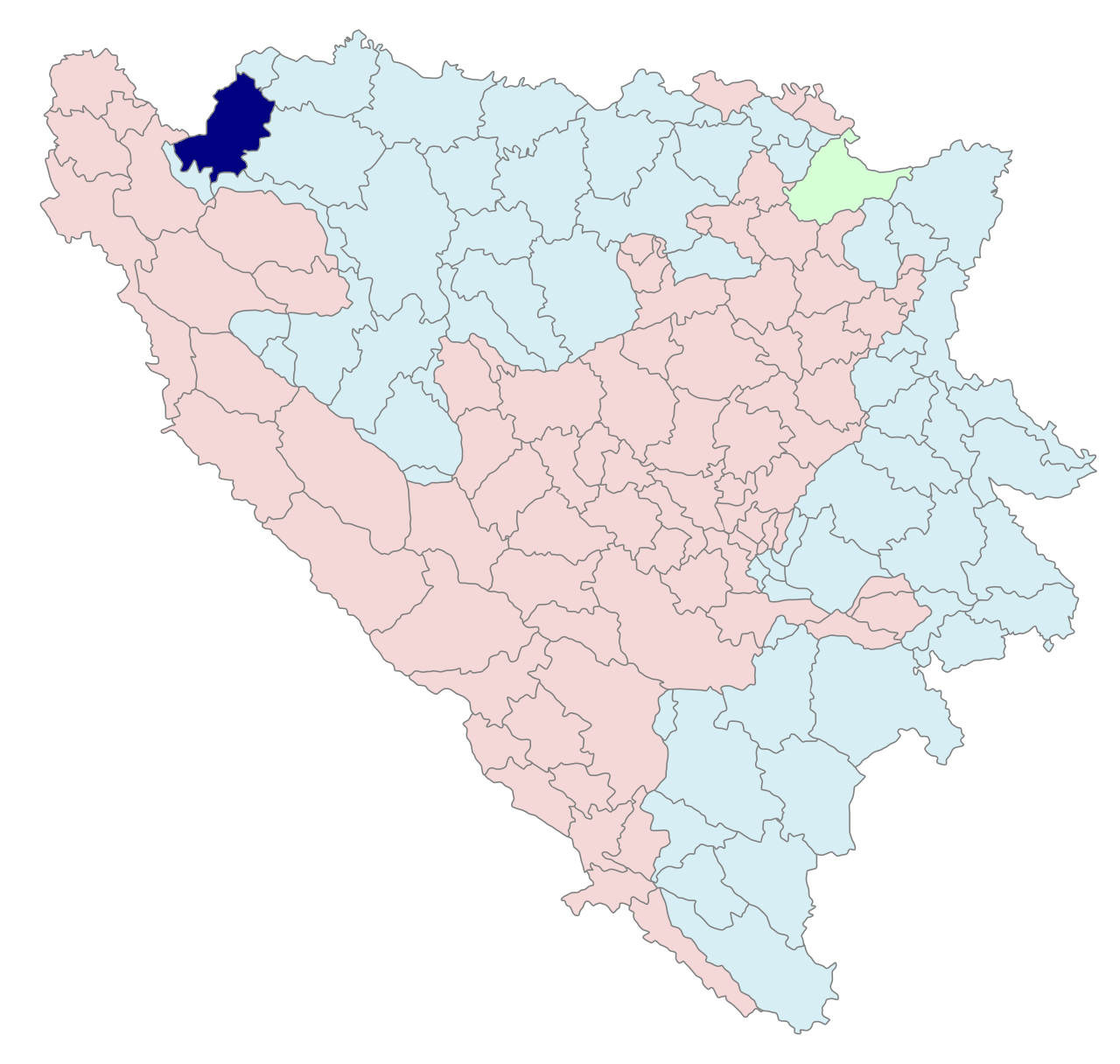
Location of Bosanski Novi (Novi Grad) municipality within Bosnia and Herzegovina
Location of the Bosanski Novi (Novi Grad) municipality on the Una, at the northwestern edge of Bosnia. Map: Andrein · Public domain · via Wikimedia Commons

At a glance

Location
Bosanski Novi (Novi Grad), northwestern Bosnia, on the Una
Period
May–September 1992
Perpetrators
VRS, Bosnian Serb police and paramilitaries, within the ARK
Victims
Bosniak civilians
Detention
The Mlakve football stadium and the town fire station
Deportation
More than 4,000 civilians transferred to Doboj; others expelled across the Una toward Croatia
Legal status
Crimes against humanity (murder, torture, persecution)
Key cases
Brđanin; Karadžić; Mladić; domestic prosecutions in BiH

Summary

Bosanski Novi (today Novi Grad), on the Una river at the northwestern edge of Bosnia, was cleansed of its Bosniak population in the summer of 1992. Between early May and September, Serb forces attacked the Bosniak villages of the Japra valley — among them Blagaj — burning and looting homes, killing and expelling civilians, and concentrating the men in detention at the Mlakve football stadium and the town fire station. Thousands were then deported, more than 4,000 of them transported to Doboj and others driven across the river toward Croatia.

The Stadium and the Deportations

The use of the Mlakve stadium as a detention site is emblematic of the improvised, total character of the 1992 cleansing: the ordinary infrastructure of civic life — a football ground, a fire station, a school — was repurposed overnight into the machinery of persecution. Men held at Mlakve were subjected to beatings and abuse; some were killed. The detentions served as a prelude to mass deportation. The transfer of over 4,000 civilians to Doboj, and the expulsion of others across the Una, emptied the municipality of its Bosniak inhabitants within months.

Scholarly Analysis

Deportation as the goal

Bosanski Novi is a useful corrective to the assumption that the measure of ethnic cleansing is the body count. Here the dead were fewer than in Prijedor or Ključ, but the outcome — the complete removal of a community from its homeland — was the same. Killing and detention functioned primarily as instruments of expulsion: enough violence to make staying impossible, applied until the population fled or was transported out. The forcible transfer of a protected population is itself a crime against humanity and a recognized act of ethnic cleansing, whether or not it is accompanied by mass killing.

The border as escape and as trap

Bosanski Novi's position on the Una, the boundary with Croatia, shaped its fate. The river offered an exit for those being expelled, but the international border also made the municipality a pressure point where displaced people accumulated, were extorted, and were pushed across under duress — their flight recorded by international monitors. The town is thus a case study in how the geography of borders structures the logistics of cleansing.

The Train from the Japra Valley

The cleansing of Bosanski Novi has a particular emblem: a train. After the Bosniak villages of the Japra valley were emptied into Blagaj Japra, some 4,000 people of all ages were loaded, on 9 June 1992, into a railway train of twenty-two closed cars and sent toward Doboj. The next day 652 work-fit men were taken off the convoy and returned to the Mlakve football stadium, where, from June to August, at least 700 Bosniak men were detained, beaten, and denied food, water, and medical care. Radovan Karadžić was later convicted, under command responsibility, for the abuses at Mlakve and the deportation of the municipality's non-Serbs.

Sources: ONMS — Mlakve Stadium; ICTY, Prosecutor v. Karadžić (IT-95-5/18).

Sources and References

Balkan Insight, "Bosnian Serb Ex-Soldier Faces Trial for Attacks on Villages" (2019) (Japra valley / Bosanski Novi). Available at: balkaninsight.com — Attacks on Villages

"Ethnic cleansing in the Bosnian War," Wikipedia. Available at: en.wikipedia.org/wiki/Ethnic_cleansing_in_the_Bosnian_War

See also the ICTY judgment in Prosecutor v. Brđanin (IT-99-36), accessible through the IRMCT case archive, and the related entry on Doboj.