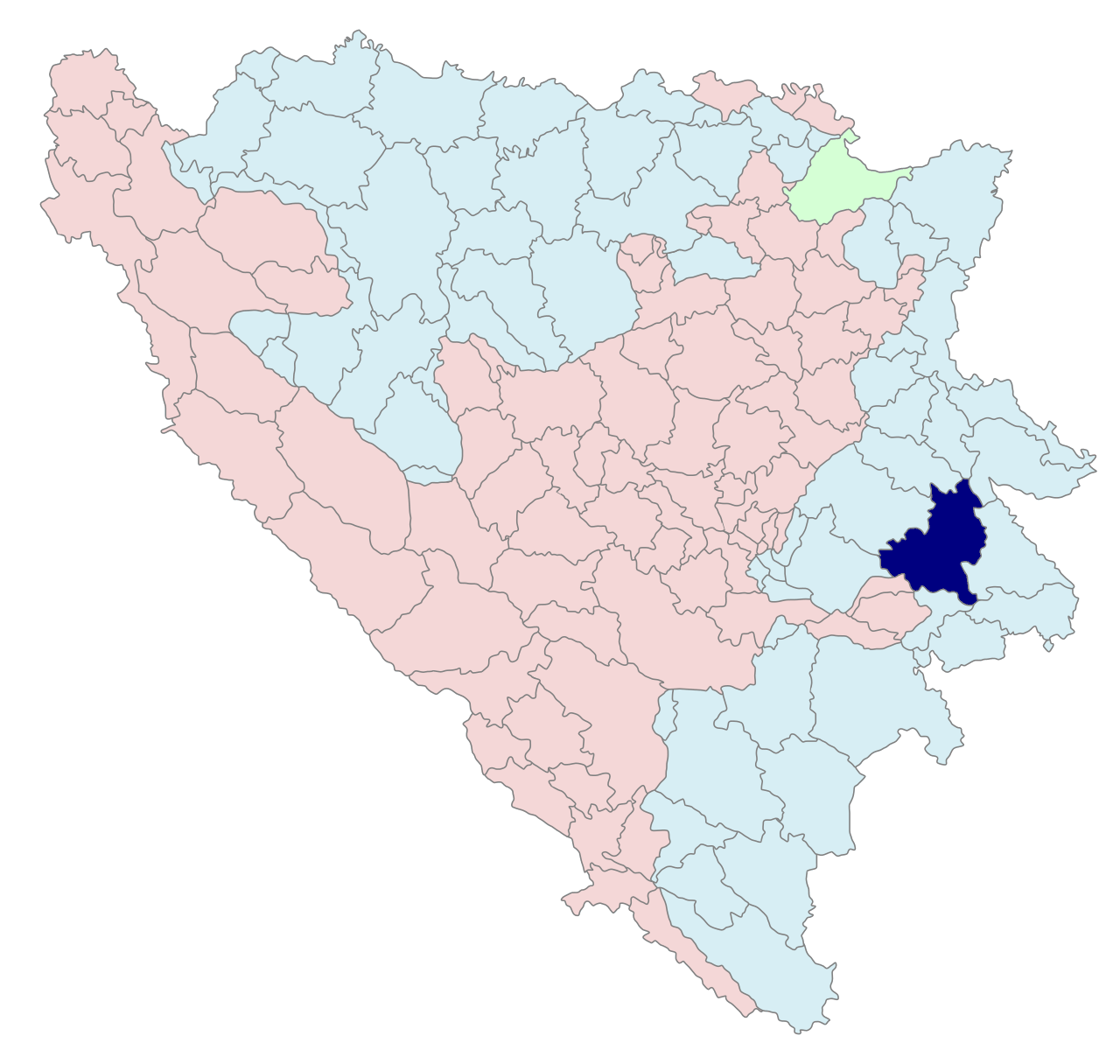
Location of Rogatica municipality within Bosnia and Herzegovina
Location of the Rogatica municipality in eastern Bosnia, between Sarajevo and the Drina. Map: Andrein · Public domain · via Wikimedia Commons

At a glance

Location
Rogatica, eastern Bosnia (Podrinje)
Period
Spring–summer 1992 onward
Perpetrators
VRS, Bosnian Serb police and paramilitaries (including Arkan's Tigers and Šešelj's volunteers), with the JNA; local commander Rajko Kušić
Victims
Bosniak civilians
Detention
The Veljko Vlahović secondary school and the "Rasadnik" facility
Killed
Several hundred Bosniak civilians across the municipality; ~40 killed at the Rasadnik site; remaining non-Serbs expelled
Legal status
Crimes against humanity, persecution

Summary

Rogatica, a municipality between Sarajevo and the Drina, followed the now-familiar trajectory of eastern Bosnia in 1992. In a systematic attack by VRS, police, and paramilitary units in the spring and summer of that year, several hundred Bosniak civilians were killed, large numbers were detained in improvised camps, and the surviving non-Serb population was expelled. The principal detention sites were the Veljko Vlahović secondary school and a facility known as Rasadnik, where men and women were held, abused, tortured, and in many cases killed.

Detention and Killing

Courts have established that the campaign in Rogatica was wide-ranging and systematic. Bosniak civilians were rounded up and confined at the Veljko Vlahović school — a prison camp run under the command of the local Serb leader Rajko Kušić — and at the Rasadnik site, where around 40 prisoners were killed amid widespread beatings and torture. Women were among those detained and abused. By the time the violence had run its course, the once-substantial Bosniak community of Rogatica had been reduced to almost nothing, its members dead, imprisoned, or driven out, and its mosques destroyed.

Scholarly Analysis

The repetition that proves the system

Rogatica is, in isolation, a "smaller" case — hundreds rather than thousands killed, no single emblematic massacre. Its significance lies precisely in its ordinariness. The same elements seen at Višegrad, Foča, Vlasenica, and Zvornik recur here almost identically: the systematic attack, the conversion of a school into a camp, the killing of detained men, the abuse of women, the destruction of religious buildings, the expulsion of survivors. When a pattern repeats across dozens of municipalities with this degree of fidelity, it ceases to be a series of local tragedies and becomes evidence of a single coordinated design — which is exactly the inference that genocide and joint-criminal-enterprise jurisprudence draws from the geographic distribution of the crimes.

The contest over "voluntary" departure

Defence narratives in cases touching on Rogatica have at times claimed that the Bosniak population left "voluntarily." This framing — that the victims simply chose to go — is one of the characteristic moves of genocide denial, and it inverts cause and effect: people fled because they were being killed, detained, and terrorized. The documentary and judicial record of the camps at Rogatica is, among other things, the refutation of that claim.

"The Deadline to Cleanse Rogatica"

After the shelling of Rogatica began on 22 May 1992, the town's Bosniaks were ordered by loudspeaker to assemble in the square, made to sign declarations of loyalty, and taken to the Veljko Vlahović secondary school — about 400 in the first month, later as many as 1,100, all of them Muslim but for two Serb women married to Muslims and one Serb family whose sons had refused to serve. From the school, men were moved to the Rasadnik camp, where some forty were killed; on 5 August 1992 around twenty Bosniaks and a fourteen-year-old boy were brought there and held in two rooms with boarded-up windows. According to witness testimony, the local commander Rajko Kušić was angry that the Muslims "refuse to cooperate," making it impossible for him to meet his "deadline to cleanse Rogatica" — a phrase that names the campaign's purpose in the perpetrator's own words. Kušić, charged with more than 150 killings, is being tried before the High Court in Belgrade.

Sources: Glas Žrtava — detention facilities in Rogatica; Detektor — charges over Rogatica crimes.

Sources and References

BiH News Platform, "Remembering the Murders and Abuse of Bosniaks in Rogatica" (2014). Available at: bosnianewsplatform — Rogatica

Balkan Insight, "Mladic Witness: Muslims Left Bosnia's Rogatica 'Voluntarily'" (2014). Available at: balkaninsight.com — Rogatica

"Ethnic cleansing in the Bosnian War," Wikipedia. Available at: en.wikipedia.org/wiki/Ethnic_cleansing_in_the_Bosnian_War

See also the relevant portions of the ICTY judgments in Prosecutor v. Mladić (IT-09-92) and Prosecutor v. Karadžić (IT-95-5/18), accessible through the IRMCT case archive.