← The Bosnian Genocide / Bosanska Krajina
Paramilitary terror on the eastern edge of the Krajina — the “Mice” group, the Pribinić camps, and the Mount Borja massacre
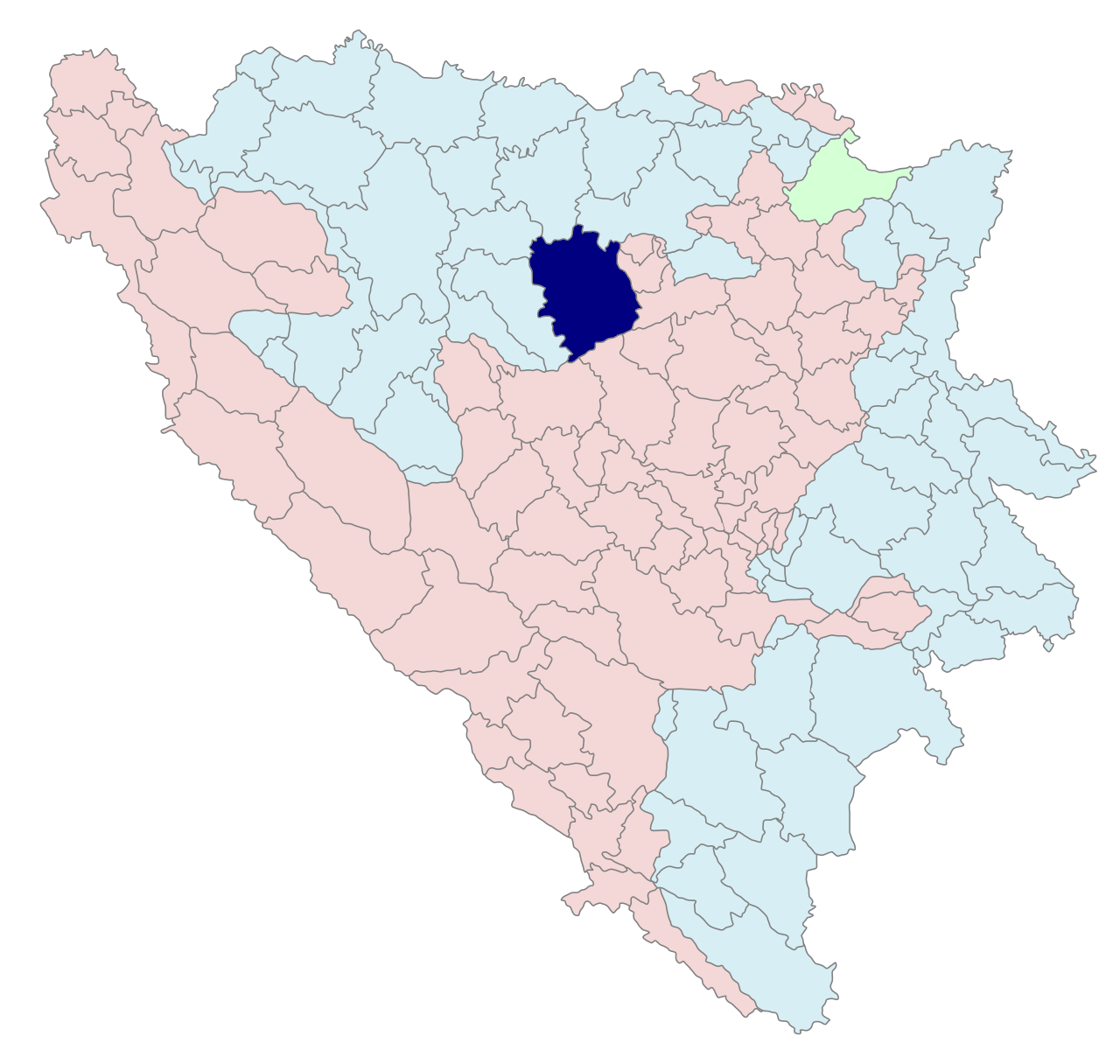
The neighbouring municipalities of Prnjavor and Teslić, on the eastern flank of the Autonomous Region of Krajina, were both predominantly Serb but home to substantial Bosniak and Croat minorities. In the summer of 1992 those minorities were terrorized, detained, and expelled, in large part by paramilitary formations operating with the cooperation of the local police and army. Teslić was held in the grip of a notorious group known as the "Mice" (Miće); Prnjavor was the home base of Veljko Milanković's "Wolves from Vučjak," one of the earliest Bosnian Serb paramilitary units.
In the municipality of Teslić, the Republika Srpska police and army ran several detention facilities between June and October 1992 — at Pribinić, where the cultural centre, post office, agricultural pharmacy, and a warehouse held some 200 Bosniak and Croat prisoners, and at the police station (SJB) in Teslić itself. Prisoners were denied medical care, and some died from beatings. On the night of 17–18 June 1992, 28 Bosniak prisoners were taken from the Teslić police premises and the Pribinić jail to the hamlet of Bebe on Mount Borja, where they were executed and buried in a previously prepared mass grave.
At Prnjavor, the "Wolves from Vučjak" — led by Veljko Milanković, among the first paramilitaries raised in Bosnian Serb territory — participated in the intimidation, robbery, and expulsion of the non-Serb population and the destruction of their property and religious buildings.
The Mount Borja massacre was prosecuted before the War Crimes Chamber of the Court of Bosnia and Herzegovina. Five members of the "Mice" group — Dragan Marjanović, Saša Gavranović, Vitomir Dević, Zoran Šljuka, and Dragomir Kezunović — were convicted as conspirators in the abduction and killing of the 28 prisoners, though their sentences were later reduced on appeal. The crimes in Prnjavor and Teslić also formed part of the regional persecution charges against the ARK leadership in the ICTY case against Radoslav Brđanin.
Prnjavor and Teslić bring into focus the role of irregular paramilitary formations in the cleansing campaign. Groups like the "Mice" and the "Wolves from Vučjak" provided the regime with deniable muscle: the most flagrant terror could be attributed to "uncontrolled" elements even as those elements operated hand-in-glove with the official police and army, used official detention facilities, and served the official objective of removing the non-Serb population. The legal record — convictions linking the paramilitaries to state premises and state forces — dismantles the fiction of their independence.
That the Bebe/Mount Borja killings were tried not at The Hague but before Bosnia's own War Crimes Chamber illustrates the second phase of post-war justice. The ICTY, with finite time and resources, prosecuted the senior architects; the thousands of mid- and lower-level perpetrators could be reached, if at all, only by domestic courts. The reduced sentences on appeal also point to the persistent fragility of that domestic process — a reminder that accountability for the Krajina's many "smaller" crimes remains, three decades on, substantially incomplete.
Detektor / BIRN, "Mice Paramilitary Group Terrorized Teslic, Says Witness" (2016). Available at: detektor.ba — Mice in Teslic
Balkan Insight, "Sentences Cut for Bosnian Serbs Behind Teslic Massacre" (2019). Available at: balkaninsight.com — Teslic Massacre
ONMS / Centre for Nonviolent Action, "Warehouse in Pribinić, Teslić" and "Bebe hamlet, Mount Borja, Teslić." Available at: onms.nenasilje.org — Pribinić
See also the ICTY judgment in Prosecutor v. Brđanin (IT-99-36), accessible through the IRMCT case archive.