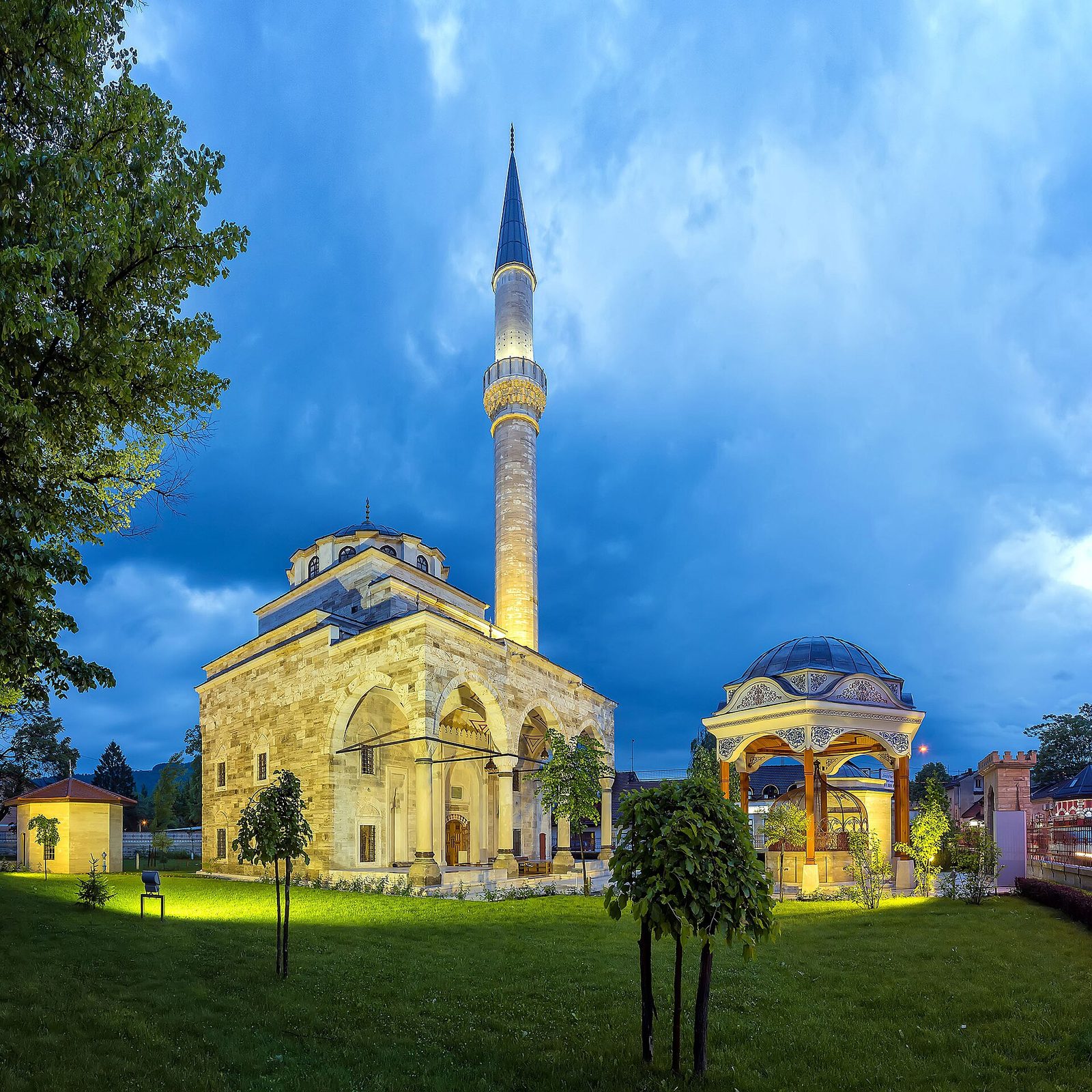
Construction, Destruction, and Resurrection of a 16th-Century Ottoman Masterpiece
Four centuries of civilisation, and the campaign to erase it
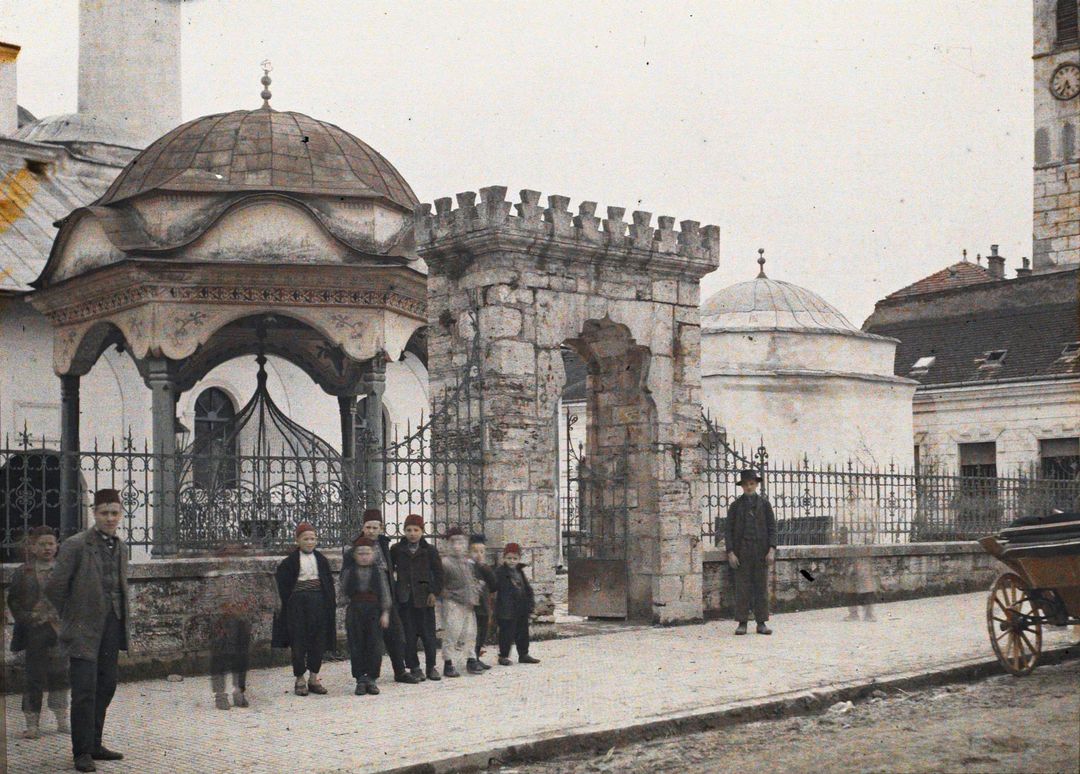
Ferhadija Mosque, 1912. Public domain / Wikimedia Commons.
The Ferhadija Mosque — formally the Ferhat-Pasha Mosque (Ferhat-pašina džamija) — was built in 1579 and stands as one of the greatest achievements of 16th-century Ottoman Islamic architecture in the Balkans. Commissioned by Ferhad Pasha Sokolović, the Bosnian Sanjak-bey, it was most probably designed by a student from the school of Mimar Sinan.
For over four centuries it served as the architectural and spiritual centre of Banja Luka's Muslim community — a monument admired by residents of all faiths. Listed as a cultural heritage site of Bosnia and Herzegovina in 1950 and placed under UNESCO protection, it was described by Cultural Heritage Without Borders as "one of the most important Islamic monuments in the region, and in Europe."
On the night of 6–7 May 1993, it was blown up on the orders of the authorities of Republika Srpska. The rubble was hauled to a secret dump site. The levelled ground was paved as a parking lot. It was one of sixteen mosques destroyed in Banja Luka — a city that saw no fighting.
Architecture, composition, and cultural significance
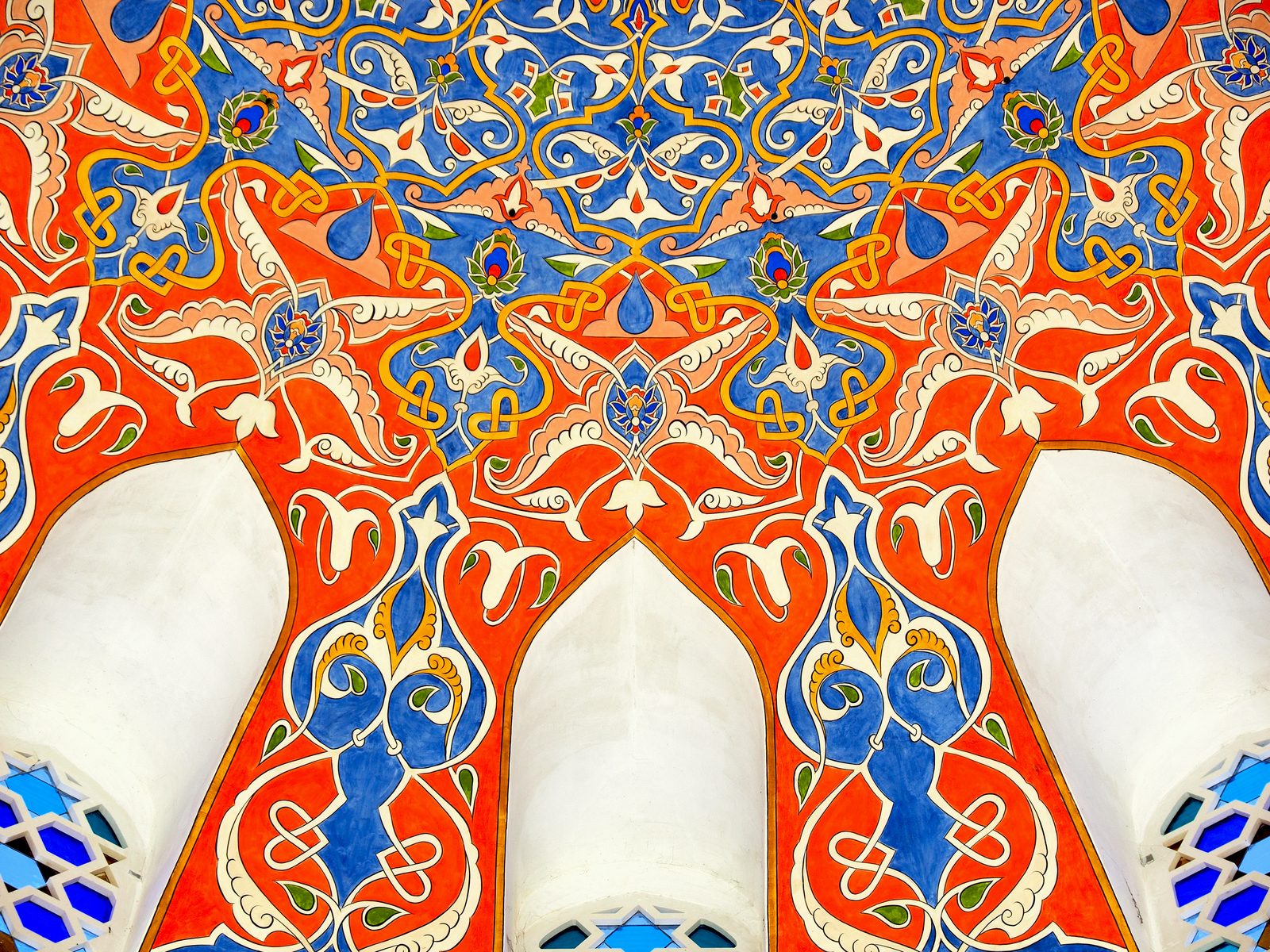
Photo: Wikimedia Commons, CC BY-SA 4.0
The mosque was designed in the classical Ottoman style, most probably by a student of Mimar Sinan — the great imperial architect — given its resemblance to Sinan's Muradiye Mosque in Manisa (1586). The structure was modest in scale: 18 metres wide, 14 metres long, 18 metres high at the apex of the main dome. A 41-metre minaret soared above the Banja Luka skyline.
The ensemble comprised the mosque itself, a fountain courtyard (šadrvan) with a stone basin and twelve pipes, a graveyard, three mausoleums (turbes) containing the remains of Ferhad Pasha, his granddaughter Safi-kaduna, and his standard-bearers, and a surrounding wall with gate. Nearby stood the Sahat Kula — one of the oldest Ottoman clock towers in Europe.
Photo: Wikimedia Commons, CC BY-SA 4.0
Cultural Heritage Without Borders described the mosque as embodying technical and spatial traditions belonging equally to the architecture of churches and mosques — a material expression of centuries of shared Bosnian civilisation, admired by residents of all faiths for four hundred years.
The Ferhadija was also the site of the Banja Luka Resolution of 12 November 1941, when 81 Bosniak leaders gathered within its walls to condemn Ustasha genocide against Serbs and Jews. The building chosen as a target in 1993 was the same building that had served as a site of moral conscience in 1941.
"One of the most important Islamic monuments in the region, and in Europe — many of its features belong to traditions shared by churches and mosques alike."
— Cultural Heritage Without Borders
Deliberate demolition as an instrument of ethnic cleansing and genocide
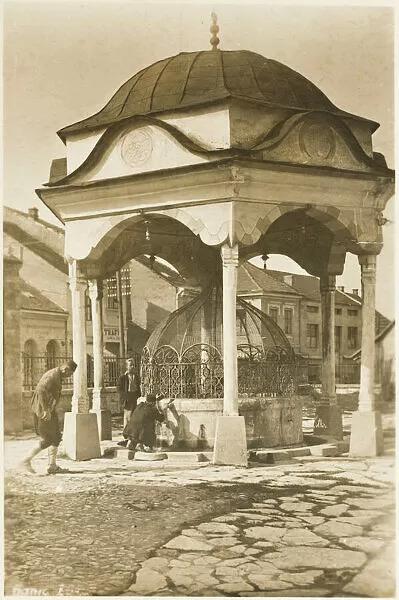
Public domain / Wikimedia Commons.
Built in the 16th century, the Ferhadija stood for almost 400 years before being destroyed with explosives on the night of 7 May 1993 — in Banja Luka, a city that saw no fighting. The date was chosen deliberately: it was the Serbian Orthodox holiday of Saint George's Day.
The Ferhadija and the nearby Arnaudija mosque were blown up within fifteen minutes of each other. The operation required military-grade explosives and coordination at the level of local authorities. The minaret survived the first explosion and was then deliberately razed to the ground.
Most debris was transported to a secret dump site. UN officials who attempted to salvage fragments were detained by the Serb militia. The Sahat Kula clock tower was destroyed several weeks later. Around thirty thousand Muslims were expelled from Banja Luka during this period.
International criminal and genocide law findings on the destruction of the Ferhadija
At the ICTY, Serb leader Radoslav Brđanin — President of the Crisis Staff of the Autonomous Region of Krajina — was convicted for orchestrating the destruction of Muslim property, including all sixteen mosques of Banja Luka, as part of a systematic ethnic cleansing campaign. He was sentenced to 32 years' imprisonment.
The ICTY Trial Chamber found beyond reasonable doubt that the demolition of the mosques was an integral component of the ethnic cleansing plan. Tens of thousands of Bosniaks and Bosnian Croats were permanently displaced. Those not expelled faced movement restrictions, forced loyalty pledges, dismissal from employment, and systematic violence.
"The Brđanin case proved that the destruction of the mosques was orchestrated as part of an ethnic cleansing campaign." — ICTY Trial Chamber
Before the International Court of Justice, Bosnia and Herzegovina cited the destruction of the Ferhadija as evidence of genocidal intent — not merely of the expulsion of a living population, but of the intent to obliterate every material trace of their presence.
Resistance, riot, persistence, and restoration
On 7 May 2001, the cornerstone ceremony was attacked by around one thousand Bosnian Serb nationalists. Coaches were burned, over thirty Bosniaks injured, one died. The ambassadors of the UK, Sweden, and Pakistan were among those trapped inside the Islamic centre. Reconstruction was suspended. May 7 became Bosnia's official Day of the Mosques.
British organisation Soul of Europe, led by Reverend Donald Reeves, promised the Mufti in 2000: "We will help you rebuild the Ferhadija." Over fifteen years of advocacy they kept the project alive. The former Grand Mufti of Bosnia later stated: "Without the Soul of Europe there would be no Ferhadija."
Foundation repairs completed in June 2007. The Sarajevo School of Architecture prepared detailed studies for an exact architectural replica, incorporating around 60% of the original masonry recovered from various dump sites. Reconstruction proceeded over nine years at an estimated cost of 12 million Bosnian Marks (~$8 million USD).
The mosque reopened exactly twenty-three years after its demolition, attended by Bosnia's top leaders and some 8,000 visitors. For survivors and descendants of those expelled, it was the refusal of a community to accept its own erasure. Alexander Rović, a Bosnian Serb, wrote: "We were not able to believe that the authorities would find the courage to commit such a crime."
From the Banja Luka Resolution of 1941 to the present
Photo: Wikimedia Commons, CC BY-SA 4.0
The Ferhadija stands at the intersection of two defining moments in Bosnian history. In 1941, 81 Bosniak leaders gathered within its walls to sign the Banja Luka Resolution — condemning Ustasha genocide against Serbs and Jews. In 1993, the same building was chosen as a target for destruction. The site of moral conscience became the target of obliteration.
The rebuilt mosque stands as a monument not only to the community it serves, but to a legal and moral principle: that cultural annihilation is a crime, that memory cannot be permanently buried under a parking lot, and that the survivors of genocide have the right to return to the places from which they were expelled — and to pray in them.
Today, as electoral campaigns in European countries again invoke mosque demolition as political programme, the history of the Ferhadija is not a distant abstraction. For the tens of thousands of Bosnian genocide survivors living across Europe, it is living memory. The rebuilt minaret of the Ferhadija, rising again over Banja Luka, is the answer history returns to those who believe a people and their culture can be permanently destroyed.
"The purpose of this destruction was the extermination of Bosnian Muslims and their culture."
— Donald Reeves, Director of the Soul of Europe, 2016
1. ICTY Trial Chamber. Prosecutor v. Radoslav Brđanin, Case No. IT-99-36-T. Judgment, 1 September 2004.
https://www.icty.org/case/brdanin
2. International Court of Justice. Application of the Convention on the Prevention and Punishment of the Crime of Genocide (Bosnia and Herzegovina v. Serbia and Montenegro). Judgment, 26 February 2007.
3. Commission to Preserve National Monuments of Bosnia and Herzegovina (KONS). Decision No. 08.2-6-533/03-8, 7 May 2003. Category I National Monument, Reference No. 1326.
4. Human Rights Watch. "Report on Ethnic Cleansing in Banja Luka." 1994.
https://www.hrw.org/reports/1994/bosnia2/
5. Coward, Martin. Urbicide: The Politics of Urban Destruction. Routledge, 2008. ISBN 978-0-415-46131-3.
6. Ćelić, Džemal. Ferhadija u Banjaluci. Society of Conservators of Bosnia and Herzegovina, Sarajevo, 1968.
7. Maass, Peter. Love Thy Neighbour: A Story of War. New York: Vintage Books, 1996. ISBN 0-679-44433-5.
8. BBC News. "Razed Ancient Bosnian Mosque Re-opens." 7 May 2016.
https://www.bbc.co.uk/news/world-europe-36237014
9. Reeves, Donald. "Radovan Karadžić and the Ferhadija Mosque in Banja Luka, Bosnia." Renegade Inc., 7 April 2016.
https://renegadeinc.com/radovan-karadjic-and-the-ferhadija-mosque-in-banja-luka-bosnia/
10. The New York Times. "Bosnian Serb Crowd Beats Muslims at Mosque Rebuilding." 8 May 2001.
11. Wikipedia / Wikimedia Commons. "Ferhat Pasha Mosque (Banja Luka)." Images CC BY-SA 4.0.
https://en.wikipedia.org/wiki/Ferhat_Pasha_Mosque_(Banja_Luka)
These sources provide comprehensive documentation of the architectural history, deliberate destruction, international legal proceedings, and reconstruction of the Ferhadija Mosque, and its place in the broader history of the Bosnian genocide and cultural annihilation.