A Testament to Civic Courage in the Face of Genocide (1941)
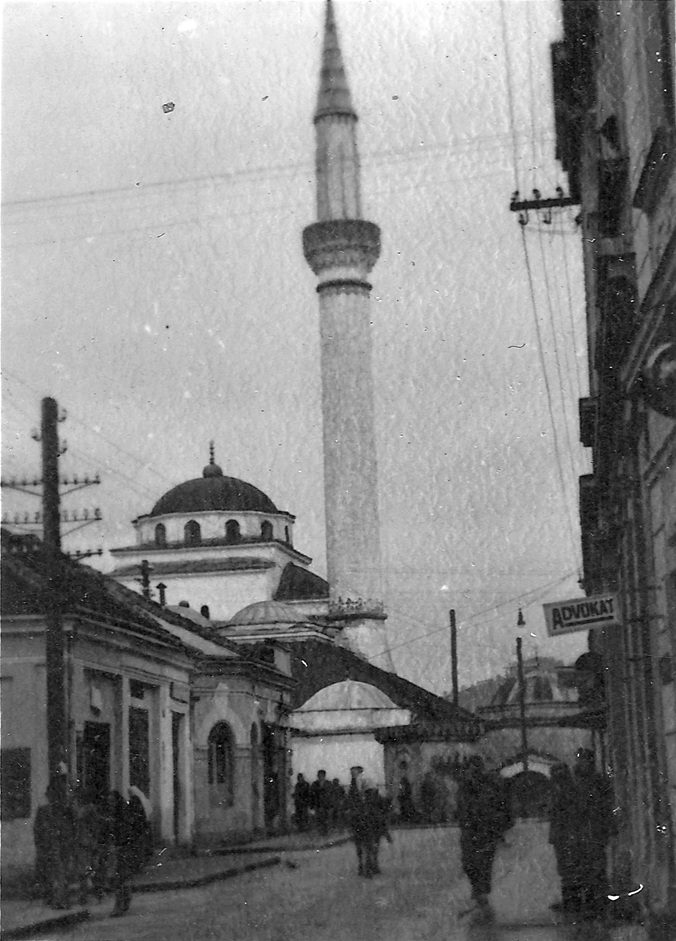
The Banja Luka Resolution was adopted on 12 November 1941 in the Ferhad Pasha Mosque, during the period when Banja Luka was under the rule of the Independent State of Croatia (NDH). It was signed by 81 prominent Bosniak leaders and intellectuals, including the mayor Hakija Bešlagić, and sent to Muslim ministers and the NDH government.
The resolutions issued by Bosniak political, religious, and social elites during the second half of 1941 represent a dramatic peak in Bosniak political activity in the pre-communist era. These resolutions emerged as moral and political statements during the early phase of World War II, when Bosnia and Herzegovina was incorporated into the Independent State of Croatia (Nezavisna Država Hrvatska, NDH). Although they had little practical influence on events on the ground, they constituted some of the clearest condemnations of racial ideology, ethnic hatred, and mass violence in the territories of the dismembered Kingdom of Yugoslavia between 1941 and 1945, with the exception of the Communist Party of Yugoslavia.
Date of adoption
Prominent Bosniak leaders and intellectuals
Ferhad Pasha Mosque, Banja Luka
Hakija Bešlagić, Mayor of Banja Luka
Context of fascist dictatorship and genocidal policies
The NDH was established on 10 April 1941 as a puppet state of Nazi Germany and Fascist Italy. Led by Ante Pavelić and his Ustasha movement, the regime introduced a fascist dictatorship based on a mixture of Nazi racial ideology and Catholic proselytism. Pavelić outlawed the Croatian Peasant Party (HSS) and placed its leader Vlatko Maček under house arrest. His government implemented radical antisemitic measures and pursued policies aimed at eliminating the Serbian population from Croatian and Bosnian territories, believing that the Croatian national question could only be resolved once Serbs were confined east of the Sava and Drina rivers.
Pogroms, forced conversions, and mass killings were frequent, including the notorious massacre in the Orthodox church in Glina, where hundreds of Serb men, women, and children were burned alive. Concentration camps such as Jasenovac and Stara Gradiška were established to imprison and exterminate Jews, Serbs, Communists, and political opponents.
Paradoxically, the NDH considered Bosniaks a natural part of the Croatian national body, calling them "the flowers of the Croatian people." This policy, however, conflicted with the Catholic Church's missionary ambitions, which sought to suppress or eradicate Islam. The Ustasha campaign against Serbs also destabilized Bosnia's traditionally multi-religious society. Serbian peasants organized guerrilla resistance, often retaliating against Bosniak villages, which contributed to a major Bosniak refugee crisis in 1942.
In the resolution, the signatories condemned the killings, atrocities, forced conversions, and violence committed by the NDH against Serbs, Jews, and Roma. They also criticized the misuse of Muslim symbols and names to create conflict between Muslims and Orthodox Christians. The document called for unity, peaceful coexistence among neighbors, and equal justice for all people regardless of religion.
The Banja Luka Resolution was signed by 81 prominent Muslim leaders, including the mayor Hakija Bešlagić, and was sent to Muslim ministers and the NDH government. It condemned Ustasha violence against Serbs and Jews, criticized Bosniaks who participated in atrocities, and rejected attempts to hold Bosniaks collectively responsible for Ustasha crimes. The document also condemned insults to Islam and Catholic proselytizing activities. While the resolution was more direct in condemning crimes against Serbs, it also addressed the destruction of Jewish property, reflecting awareness of German antisemitism and possible fears of retaliation.
The resolution emphasized that Bosnians shared a common love for Bosnia and Herzegovina and should live together as brothers despite propaganda and conflict. It argued that violence and hatred destroy social order and threaten the survival of the state.
Resolution of the Muslims of Banjaluka - 12 November 1941
Since the inception and establishment of the Independent State of Croatia (NDH), we Muslims have been observing with the highest concern how Ustashas and other officials with or without influence in government committed the gravest errors and crimes. The most basic rights of man are scrupulously offended. The security of life and property, the freedom of religion and conscience, ceased to be in effect and to be applied to a large segment of the population in these regions. The killings of priests and other leaders without trial or sentence, the shootings and harrasment of the population, frequently composed of innocent people, women and even children, the mass expulsion of entire families from their houses and even their beds, having only been given one or two hours warning, their deportations to unknown areas, the appropriation and plunder of their properties and possessions, the destruction of places of worship, frequently by the hands of the faithful themselves, the forced conversion to the Roman Catholic faith—all these are the facts which have brought out our disgust, which brings the aversion to any honest man and which have had a very deep impact on us, the Muslims. We never expected nor hoped, let alone desired, such methods of work and administration in our regions. In our difficult and uneasy past, we never, even under the gravest of circumstances, resorted to such an approach. We think that such atrocities should not be committed even against our fiercest enemies, for we doubt that we can find an equal for the things taking place now in our region in the history of any people.
The results of such politics—if we can give these deeds such a name—are absolutely terrible, and it is expected that any reasonable man would conclude the same. Religious tolerance, which had been sensitively observed in Bosnia and Herzegovina, despite its religious divisions, has been degraded in a frightening manner. The insults and provocations so frequently target us, the Muslims, that it has made us seriously reconsider things. A fraction of the Catholic priests consider that now is an appropriate time, and that they should use this advantage without any constraint or check. The conversion propaganda is so widespread that it resembles the Spanish Inquisition. Under the force of propaganda and without any reaction towards it by various public offices, the mass forcible conversion of the Orthodox Serbs has taken place. In this way, the ones who were denied any value as citizens and who were denied their national character became again citizens with full rights, simply because they converted to Catholicism. The equality of Islam, frequently stressed in writings and public statements, is questioned in life and practice. One frequently hears the Catholic Ustashas singing derogatory songs, insulting Muslim feelings and wishing for them the same destiny as that of the Orthodox Serbs.
Apart from the Ustasha army, not only the official part of their militia but also illegally organized groups as well, committed great insults and assaults against both the Orthodox Serbs and Muslims, and this caused the highest concern among us. The incident of the terrible murder of an imam, Edhem effendi Hodzić, here in Banjaluka, in the middle of the hospital yard and in the middle of the day, is a terrible example of the thuggishness of the Ustasha member named Josip Babić. What is the most pitiable fact is that it is unknown even today whether this criminal was arrested at all, let alone whether or not he received an exemplary punishment, as was demanded by the Muslims of Banjaluka and elsewhere.
We have many examples of Ustasha wearing fezzes while committing murders or slaughtering Orthodox Serbs. It was in Bosanski Novi where four trucks full of Ustasha crossed the river Sava (in Croatia proper) wearing fezzes. They slaughtered the entire Orthodox Serb population there. The same happened in Bosanska Kostajnica, where in a single day, 862 Serb Orthodox were slaughtered in the same way. Also in Kulen Vakuf, they did the same, and in that action a special role was played by Miroslav Matijević, an Ustasha from Vrtoca. There, 950 Serb Orthodox were slaughtered, leading the Chetniks to take revenge on 6 September 1941, when they set Kulen Vakuf on fire, for which 1365 Muslims (men, women and children) paid with their lives. We know that some Catholic Ustashas attacked Serb Orthodox shouting, "Push, Mujo, get them Huso, don't let them go Meho" and the like…
Now that the Ustasha have caused such a grave conflict between us and the Orthodox Serbs, we are called as soldiers to suppress this uprising, meaning to kill Serbs and vice versa, so that we will eradicate and exterminate one another without ever knowing when the conflict will cease or what kind of consequences it will have. This fight, which we did not provoke, became so widespread that many of our villages were burned and plundered, and their inhabitants—men, women and children—are wandering impoverished, hungry and thirsty, seeking help and protection from those who are able or unable to do so. They escape to our cities, which are already full, and it is very difficult to offer them any help. The protection offered to our people in villages is totally inadequate, especially in those regions which are under Italian occupation. The Italian army is watching without any action while Muslim villages are set on fire, as occurred quite recently in the villages in the counties Ključ, Petrovac and Sana. And even worse, those who are the perpetrators in these disorders are now living in security, wearing their uniforms, concerned predominantly with the plunder of Serb and Jewish properties and possessions. We see this best here in Banjaluka, where the property of expelled Serbs and Jews became the source of plunder and enrichment of individuals, their families and friends. We refuse with indignation the accusation that we want to take the properties of others. Here we support all Muslim actions which have the same aim, especially that of Sarajevo Muslims of 12 October 1941, and in accordance with this we demand that:
In Banjaluka, 12 November 1941.
Five key requirements for justice and protection
The genuine security of life and property should be implemented as soon as possible. The same applies to the religious freedom for all citizens of the country.
Innocent people should be protected by a strong military force.
All those responsible for committing any atrocity or crime should be tried without any regard to their rank or faith. The same applies to those who ordered or helped perpetrate such deeds.
All kinds of religious intolerance should be forbidden.
Appropriate material support for those who suffered for no reason during these disorders should be delivered as soon as possible.
The resolution emphasized unity, peaceful coexistence, and equal justice regardless of religion, stressing that Serbs and Bosniaks had historically lived together and that Ustasha policies had artificially turned them against each other. It highlighted the paradox of a society in which two traditionally coexisting communities were driven into mutual conflict by fascist national and religious policies.
Despite its moral significance, the resolution had no positive impact on Ustasha policies. On the contrary, repression intensified. In early 1942, most of the signatories were arrested and sent to the Jasenovac and Stara Gradiška concentration camps. At the same time, large-scale massacres of Serbs occurred in the Banja Luka region, including the destruction of the village of Drakulić on Orthodox Christmas Eve in January 1942, when around 1,000 people were killed by Ustasha units led by Franciscan friar Miroslav Filipović-Majstorović, later a commander at Jasenovac.
The Banja Luka Resolution has been described as a rare example of civic courage and moral resistance during a period of extreme ethnic violence. It was even referenced in 1944 by Chetnik leader Dragoljub Draža Mihailović as an example of political consciousness and bravery. However, its historical significance was later marginalized or obscured in postwar narratives, particularly in Republika Srpska, where Muslims were often portrayed solely as collaborators with the NDH and associated with the Waffen-SS Handžar Division.
Contested narratives and the preservation of memory
The broader historical debate also reflects how postwar historiography reshaped the memory of World War II. Muslims participated on multiple sides of the conflict, including the Partisans, the NDH, and Chetnik formations, often driven by survival rather than ideology. Political narratives have frequently "fascisized" Bosnian Muslims for contemporary political purposes, while contributions to anti-fascist resistance have been appropriated by other groups.
Despite their limited political impact, the Muslim resolutions of 1941 remain exemplary documents of interethnic solidarity and moral resistance. Their memory has largely been preserved within Bosnian Muslim communities through commemorations and scholarly discussion, while broader public recognition remains limited. The resolutions stand as rare historical testimonies of attempts to uphold coexistence, human solidarity, and civic responsibility in the midst of genocidal violence.
"The resolution emphasized that Bosnians shared a common love for Bosnia and Herzegovina and should live together as brothers despite propaganda and conflict. It argued that violence and hatred destroy social order and threaten the survival of the state."
The text also discusses how history was reshaped after World War II, how Muslims participated on different sides of the war, and how political narratives have distorted their role. It concludes with an example of peaceful coexistence between Muslims and Serbs in the village of Baljvine, highlighting everyday human solidarity as the true basis for coexistence in Bosnia and Herzegovina.
Tragically, in the 1990s, most of the cities where these documents were adopted would become targets of a revived ideology embraced by aspirations to achieve a Greater Serbian state project. Arkan's rampage through Bijeljina in April 1992, the Prijedor death camps of Keraterm, Omarska and Trnopolje, the cultural genocide against Banja Luka's jewel—the Ferhadija Mosque—and the four-year terrorization of the citizens of Sarajevo forever marked the history of these areas and the suffering of one people.
1. Rezolucija banjalučkih muslimana (Resolution of the Muslims of Banjaluka)
Originally published as a petition distributed in Banjaluka on 12 November 1941
Language: Bosnian
For comprehensive scholarly analysis, see:
https://books.openedition.org/ceup/1140
2. Hikmet Karčić, "Muslimanske rezolucije – integralni tekstovi", in: Novi Muallim XXII No. 88 (Winter 2021), pp. 68–83
Available in English in: Hikmet Karčić, Ferid Dautović and Ermin Sinanović eds., The Muslim Resolutions: Bosniak Responses to World War Two Atrocities in Bosnia and Herzegovina (Sarajevo: Center for Islam in the Contemporary World, 2021)
3. "Zaboravljena historija banjalučke rezolucije" (The Forgotten History of the Banja Luka Resolution)
https://balkans.aljazeera.net/teme/2016/5/13/zaboravljena-historija-banjalucke-rezolucije
4. "Muslimanske rezolucije iz 1941: Prvi glas protiv fašizma" (The Muslim Resolutions of 1941: The First Voice Against Fascism)
https://balkans.aljazeera.net/teme/2019/9/14/muslimanske-rezolucije-iz-1941-prvi-glas-protiv-fasizma
These sources provide comprehensive analysis of the historical context, significance, and legacy of the Bosniak resolutions during the NDH period and their place in the broader history of resistance to fascism and genocide.